

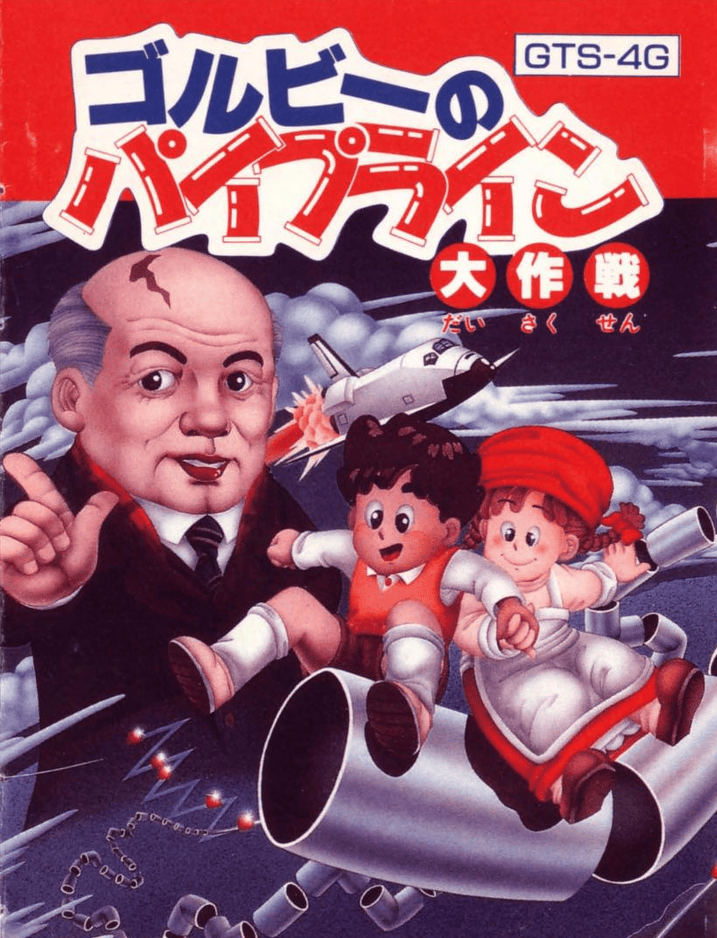
I love it when these kind of rabbit holes suddenly open up to send me down somewhere I couldn’t possibly have anticipated going down when I woke up that day. Soviet-Japanese relations in 1991 certainly hadn’t been on my hit-list of research activities! And yes, that is indeed Mikhail Gorbachev up there!
This article, like all the others on my site, contains no elements or use of Generative AI for creation or research.
Back in the USSR
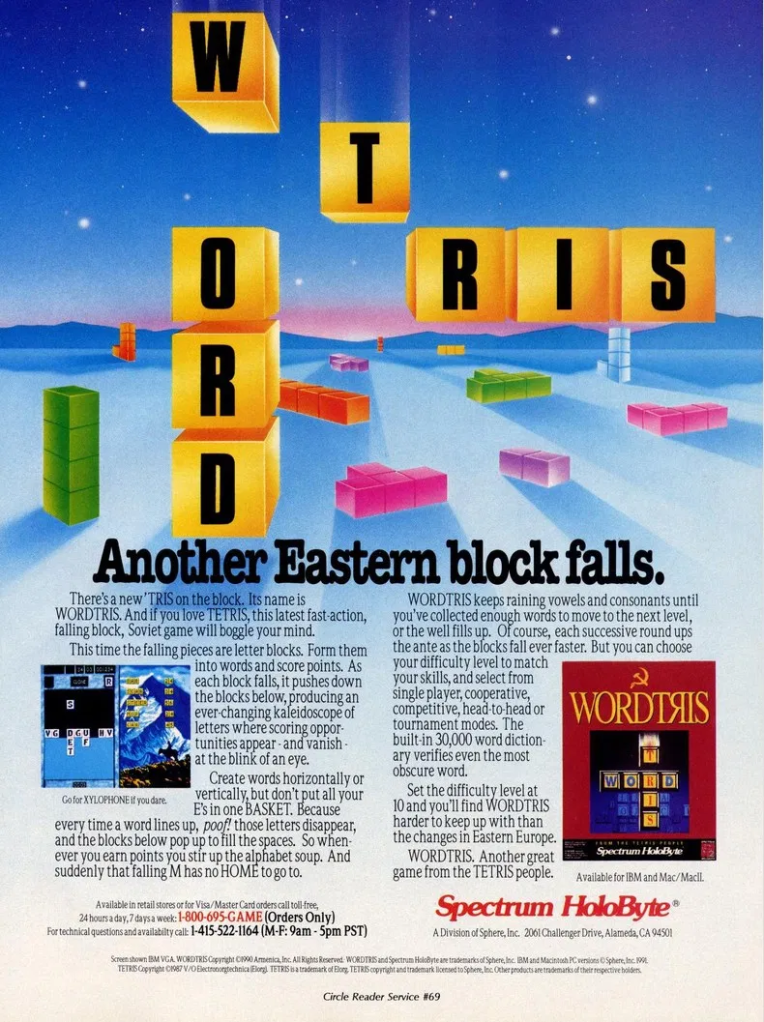
It all began when I dug into an old issue of Computer Gaming World from late 1991, published just months away from the formal dissolution of the USSR.I had found some fascinating examples of the ‘Soviet mind-boggling puzzle game’ fascination that kicked off in the wake of Tetris‘ release and seemed to have picked up speed as the superpower teetered on the brink of collapse.
Someone popped up in the comments of the BlueSky thread I posted about it (Cheers for the fascinating dig, Bugsrummy!), asking if I’d heard of the subject of today’s article: Gorby No Pipeline Daisakusen. I hadn’t, so said as much, and then immediately got to work digging in after seeing the cartoonish depiction of ‘Gorby’ on the cover they shared. That’s when I learned that this game, developed by Compile and released in 1991 for MSX2 and Famicom, is effectively a piece of diplomacy between Japan and Russia – one sanctioned by the Soviet government itself.
Setting the Scene
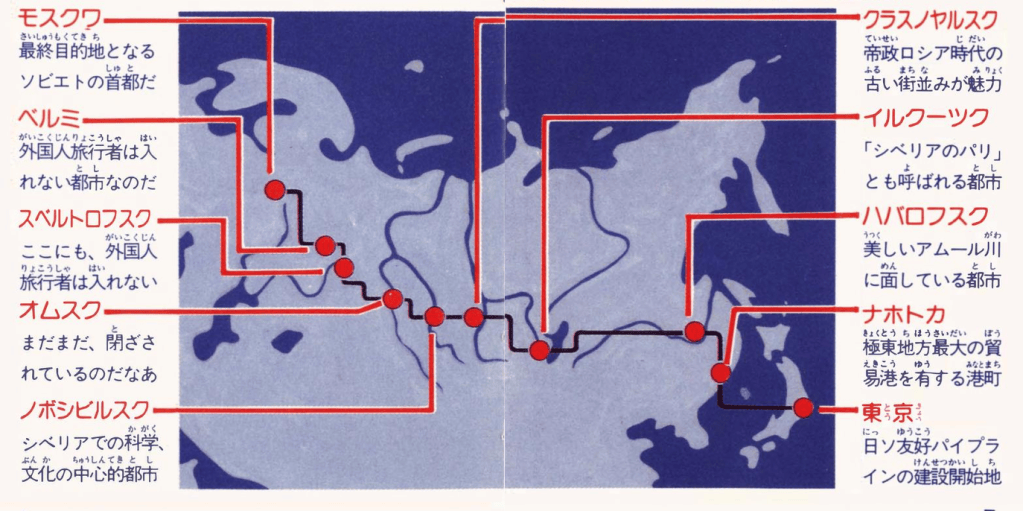
When I read about the premise of Gorby No Pipeline Daisakusen, building a water pipeline between Tokyo and Moscow as an act of friendship, one that follows the route of the Trans-Siberian Railway, I was immediately intrigued. Were Soviet-Japanese relations particularly warm – or cool – in 1991? Why a water pipeline? And why did the Soviet Embassy in Japan give their official blessing for Gorbachev’s likeness to be used in, as MSX Fan magazine reported, an ‘official game of the Soviet Union’?
Well, I got to digging, and came across the first page of an archived Asian Survey report from that very same year that plainly stated that Soviet-Japanese relations had been zigzagging up and down for years. The Soviet occupation of the ‘Northern Territories’ (the Kuril Islands) since 1945 had continued to be sore spot, participation of Japanese scientists in the ‘Star Wars’ SDI Project had concerned Moscow, and various spy and industrial espionage incidents had sparked periods of frostier relations. But after ‘Gorby’ took office, first as Soviet Premier and then as President after the former position was abolished in 1990, relations became warmer again, leading to an announcement in 1989 that he would visit Japan in 1991.
I also learned that Premier/President Gorbachev was something of a pop culture sensation in Japan from 1989 onward. An archived article published by the Deseret News in 1990 reported that ‘Gorby Mania’ was in full swing, with Gorbachev dolls a hot item. A manufacturer reveals that upwards of 300,000 of them were barely meeting demand.
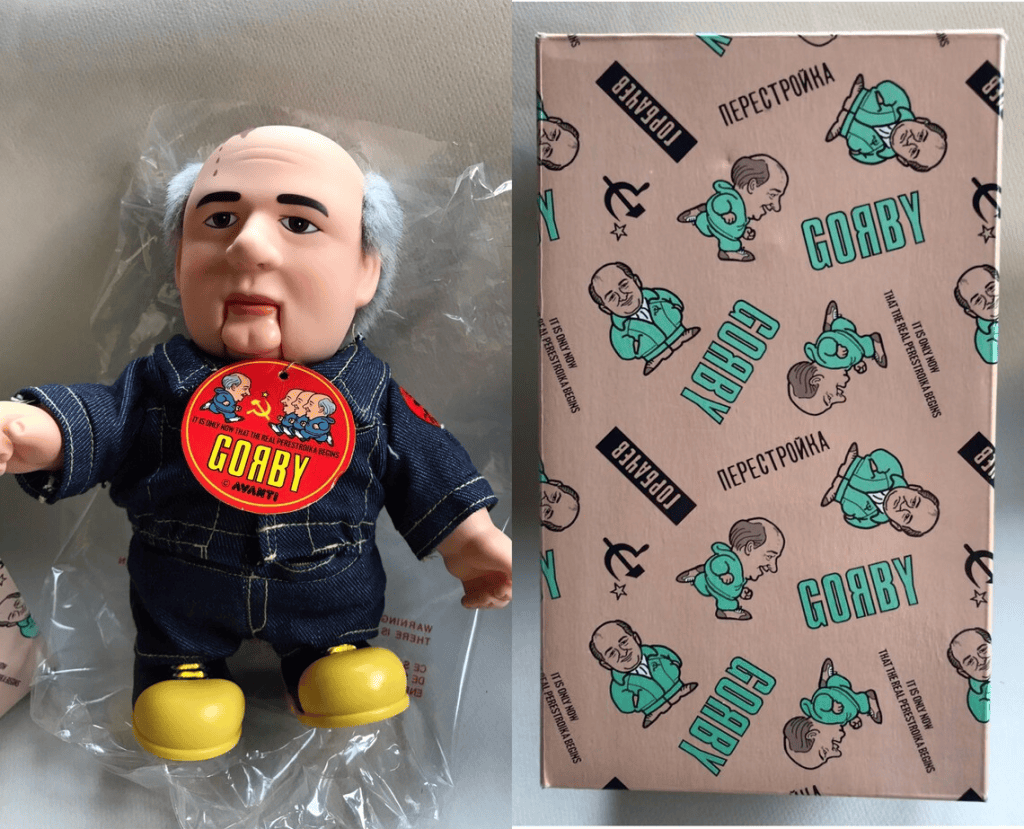
Ah. Now we’re getting somewhere, I thought! A planned visit in 1991? Warmer relations? Gorby Dolls? And what year did our Game in Japan come out? 1991? A-ha! So that’s why it has such an unusual premise!
As for why a water pipeline, I haven’t been able to conclusively nail anything down. There were proposals for oil and gas pipelines between the two countries going back to the 1970s, but nothing about water. Perhaps that too, was a little piece of diplomacy. After all, what could be more generous and kind than a nation sharing its water with another in the interests of peace and good relations?
Mr Kaifu, Build That Pipeline!
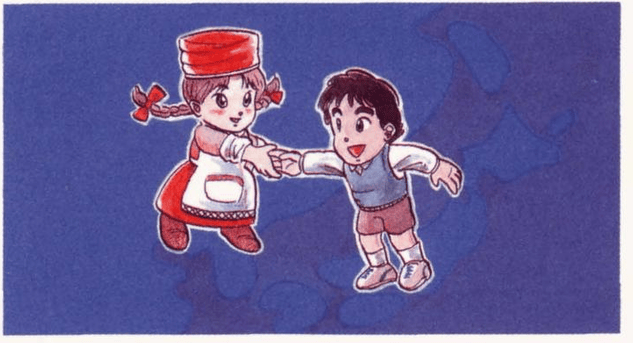
After an hour of manually translating what I could of the first few pages of the Famicom version’ instruction manual, I got the gist of what Compile were aiming for in terms of spirit. They point out that Japan and the Soviet Union have been rather distant in the past but now with ‘Gorby’ on the proverbial throne, relations have greatly improved! Compile now tasks you with building a ‘friendship pipeline’ with your own hands. Aww, how sweet!
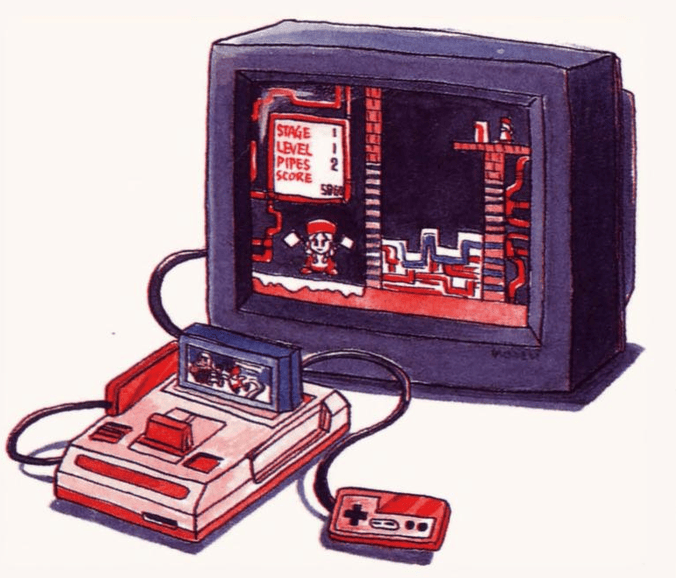
As for the game itself, well, it’s a combination of Tetris and Pipe Mania.
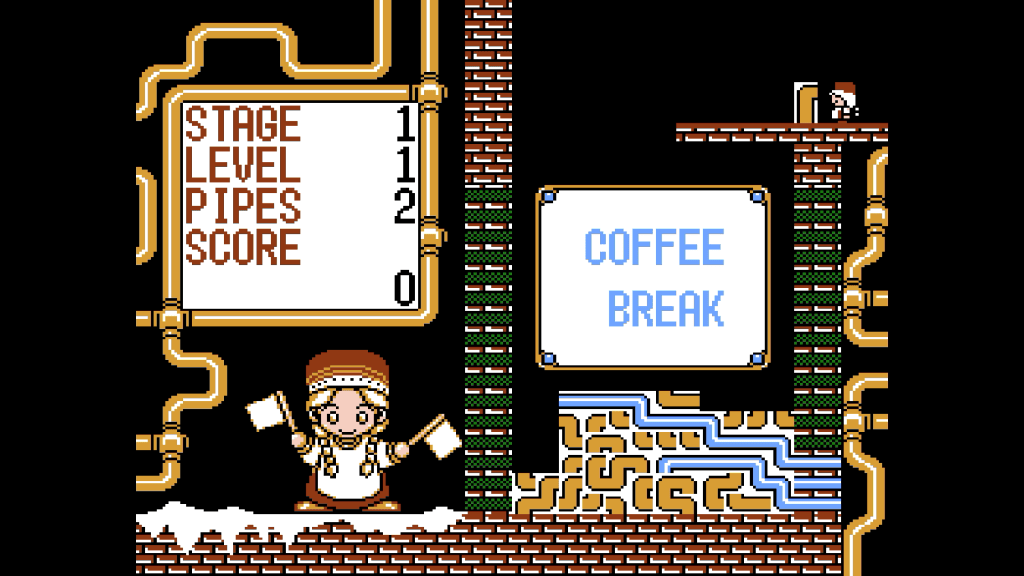
One of the cute anime Russian ladies pushes a block off the ledge at the top while the other waves her flags and cheers you on. They’ll fall at a speed determined by the difficulty level, and it’s up to you to bridge a pipe-path right to left from one set of pipes to the other. The number of times you need to do this is shown below the level number, and you can connect any pipe to another.
Now, this is all made tricky right away by the fact that each initially vertical block is made up of two separate pipe pieces. It’s up to you to manage in which order the block lands by rotating them in Tetris block fashion. And straight pipe pieces are by far the rarest of the ones to turn up and they’ll invariably be connected to a corner pipe. And pipes won’t disappear if you match three or anything like that. Only if either a rare ‘driller’ power-up drops or if you connect a pipe over from right to left will pipes be removed.
Making your task simultaneously easier and more difficult is the mechanic where if your pipe-flow ends up being blocked, it’ll spill backwards and move up to the next green pipe on the right. This gives you another chance to succeed but also means you’ve moved up one line closer to the ceiling – and failure.
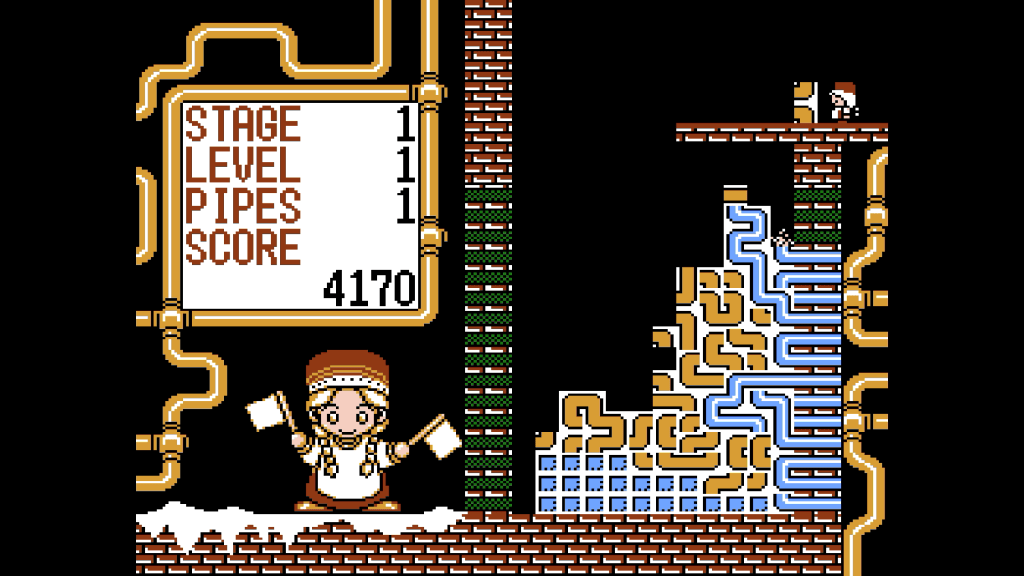
Gorby has an extra clever little mechanic up its sleeve that becomes a core consideration: you can ‘slice’ off half of a block down into a gap if you bring the other side down on an existing block.
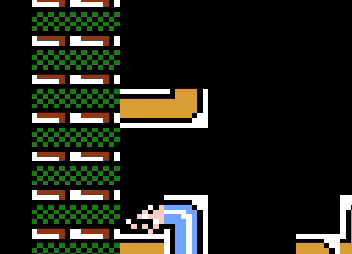
In the example above, the straight pipe on the left will get sliced off and fall down against the water-filled pipe completing the pipeline from one side to another while the bend up-right will come to rest on top of it!
This is the ‘USP’ of Gorby No Pipeline Daisakusen‘s brand of puzzling. It’s such a good one as it adds that extra element of satisfying puzzle-solving, and will get you out of a bit of a trouble if you’re quick and clever enough to notice an opportunity to use it. Something that isn’t all that easy on the later levels where the drop speed accelerates dramatically! Compounding the difficulty are squares of water that rise to fill the gap left by the completed pipes, meaning that you’re always under time and position pressure no matter how well you’re doing.
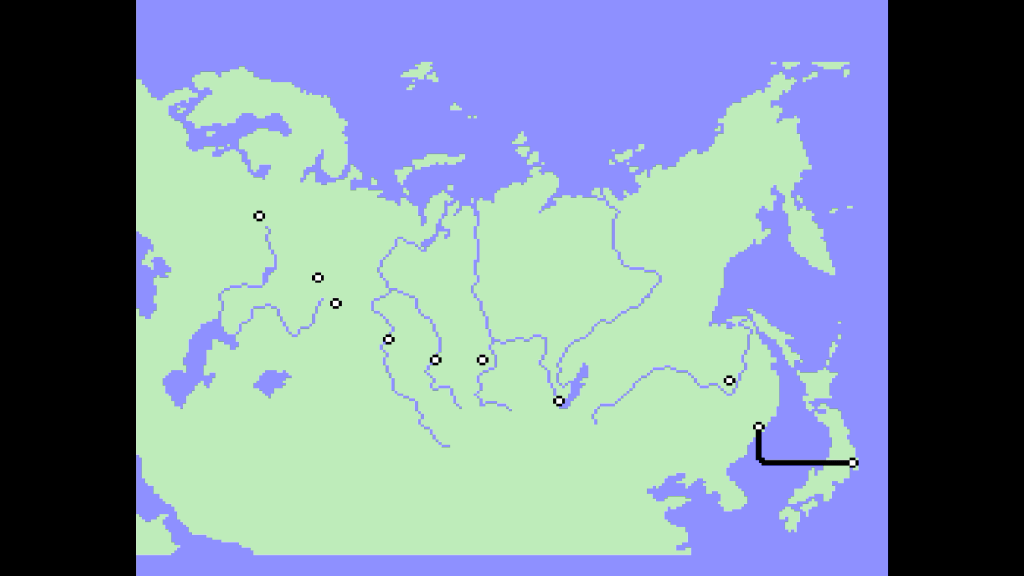
Once you’ve connected up the requisite number of pipes to clear the level, it’s off to the map screen and onto the next leg of the friendship pipe journey.
Sayonara, Mr Gorbachev
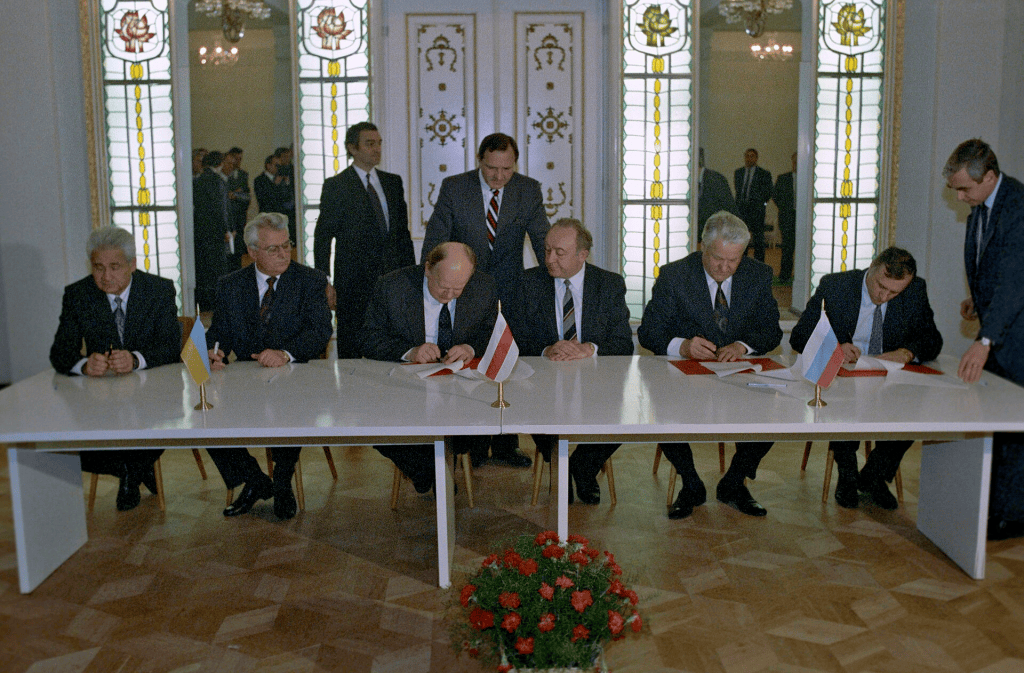
Tragically, Compile never saw their plan of being part of ‘Gorby Mania’ and extending their own welcome to the unexpected idol come to full fruition. The game was released in April 1991, but just a few months later in August, turmoil rocked the Soviet Union in the wake of an abortive coup. Politically weakened, President Gorbachev struggled to perform his duties and cancelled the planned visit, resigning in December and making way for Boris Yeltsin (effectively in control since the summer) to assume the presidency. One of Gorbachev’s final acts in office was to give his consent for the Belovezha Accords to be signed, dissolving the Soviet Union.
So yeah, what a fascinating rabbit hole to go down! The history behind and reason for Gorby No Pipeline Daisakusen‘s framing narrative is the most fascinating thing about it to me, but it’s a fun little puzzle game in its own right. One I’ll be returning to play again in the future.

