

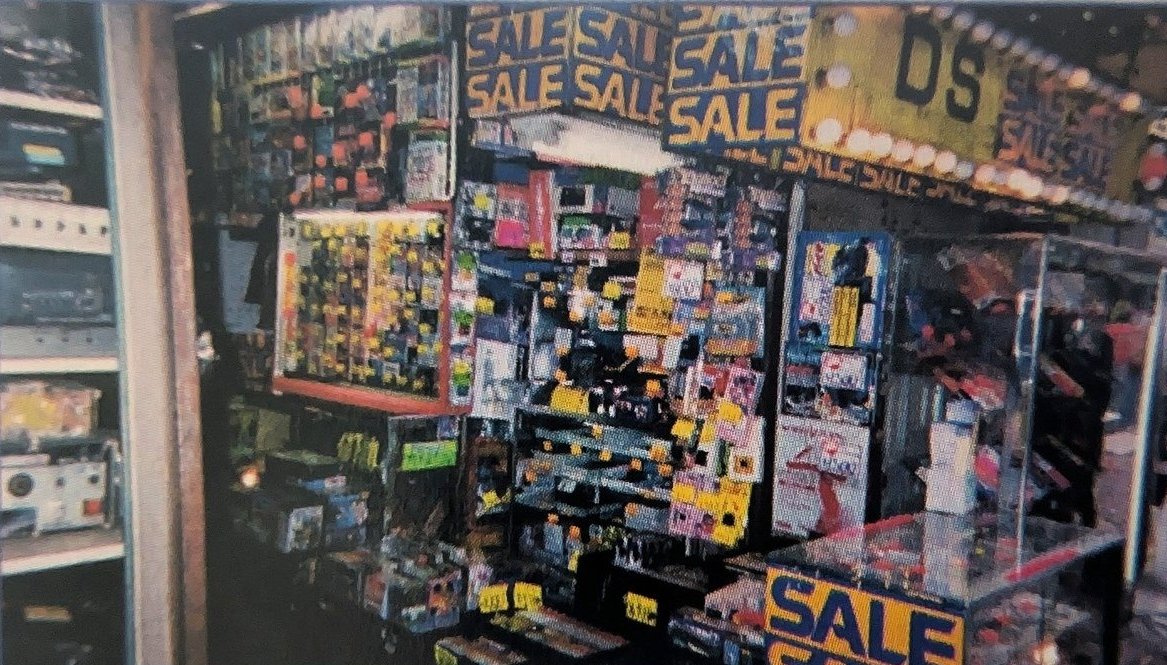
It’s been a long while since the last Pages from the Past, but I’m finally uploading another with a neat timepiece of a transcribed article. This one gives us a fascinating glimpse into Akiba’s video games scene in 2001 through the eyes and words of Chris Kohler, then already writing for a slew of tech, video games, and anime magazines for several years.
Let’s dive right in to Akiba in the New Millennium. As usual, I’ve transcribed directly from the article as written, correcting only glaring errors that affect readability (There were none here).
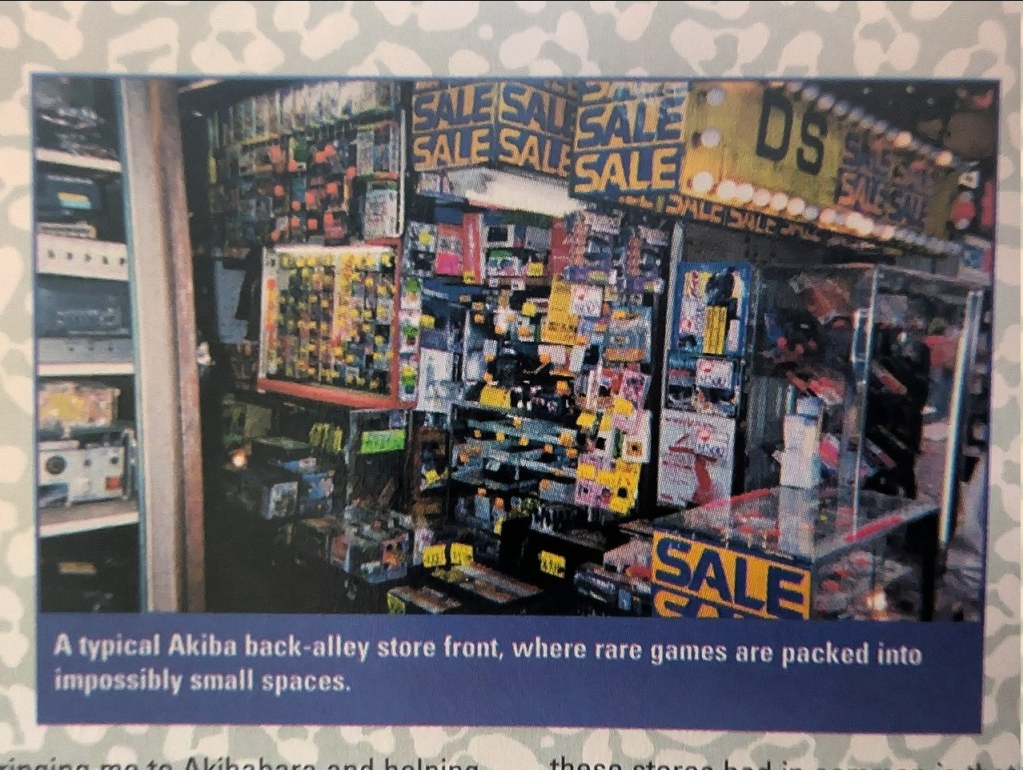
The video gamer’s Mecca? Chris Kohler hits the streets of Electric City, spends far too much money, and lives to tell about it.
It is a name reverently whispered in hushed tones by hard-core video game fans around the world, a place most wide-eyed children immersed in the latest issue of ELECTRONIC GAMING MONTHLY can but dream of visiting, where video game shops line the streets as far as the eye can see and even the rarest of the rare items can be found—for a price.
It is Akihabara, Tokyo’s famous “Electric City,” an entire district where every main street and side alley is packed with electronics stores, half of which sell video games both new and used. And during my spring vacation, I took the shinkansen from my place of residence—the small town of Kakuma—to Tokyo, where ANIMERICA Associate Editor Kit Fox not only put me up for a few days but also showed me around, bringing me to Akihabara and helping me fulfill a lifelong dream.
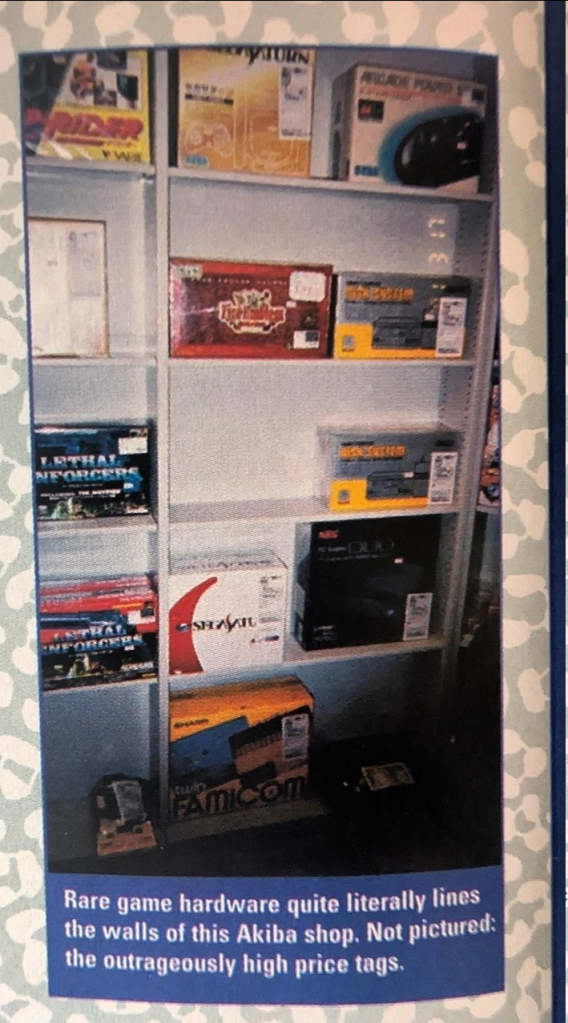
Perhaps you ask: “How could any place live up to a lifetime of such expectations?” Fair enough. In fact, that’s exactly what I asked myself all the way there. After all, with the PlayStation, Dreamcast, and Game Boy Advance all the rage, did I honestly expect to see shelves lined with the Nintendo goods of my youth; of Power Pads, Donkey Kong, copies of Final Fantasy II and III, and games for the super-rare Famicom Disk System? And hadn’t a Tokyo court ruled the sale of used games to be illegal? By the time I arrived I had convinced myself that I was going to be disappointed.
And oh, how wrong I was.
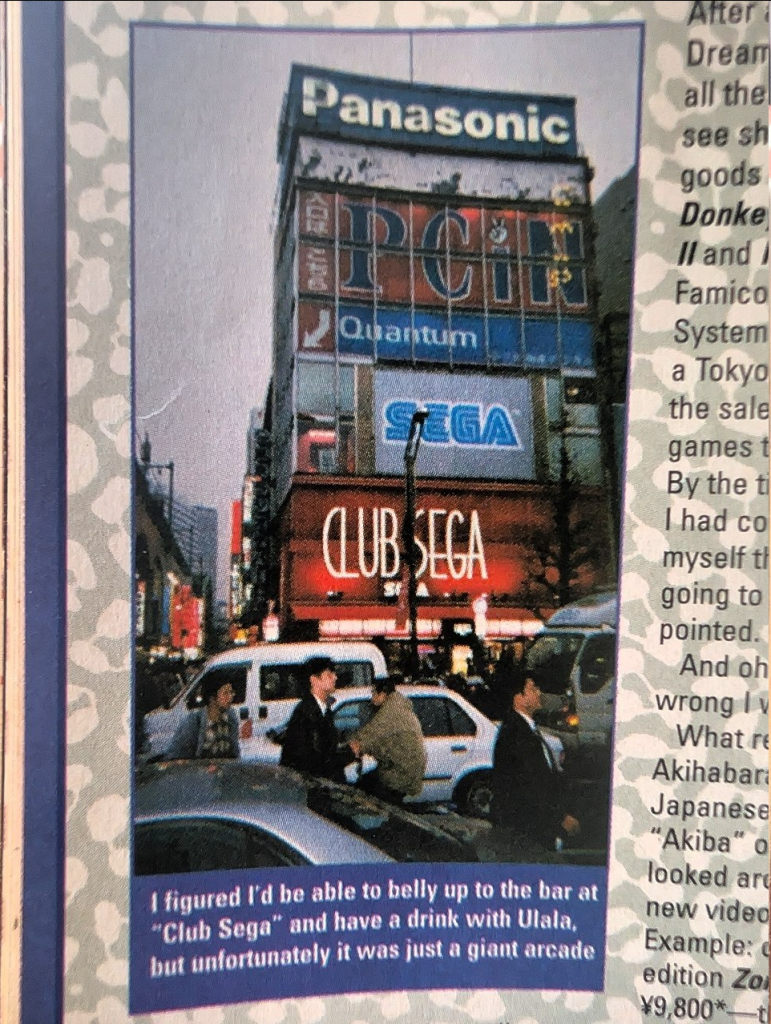
What really surprised me about Akihabara (which hereafter I, like the Japanese, will abbreviate to either “Akiba” or “Aki”) was that if you looked around you could actually get new video games cheaper than usual. Example: one store sold the limited edition Zone of the Enders set for ¥9,800*—the actual retail price is about ¥14,000. What really, really surprised me about Akiba is, legality be damned, most every store had used games for sale**, and merchandise for classic systems like the Famicom (NES), Sega Mark III (Master System), and PC Engine (Turbo Grafx 16) still filled the racks. By sheer coincidence, the first store we went into (outside of which stood employees in front of racks of deeply discounted PS2 games) turned out to be Media Land, the most vaunted, best stocked, and of course most expensive of all of Aki’s stores. Most of the rare items that I saw only once in Aki I saw among Media Land’s seven floors: boxed copies of rare Squaresoft games, *Akumajō Dracula* (Castlevania, which actually fetches ¥20,000), Nintendo Game and Watches, Phantasy Star, Atari systems, ad nauseum.
A chain called “Liberty,” which has at least six different stores in the area and many more throughout Tokyo, featured many of the same items. A family-run store in a back alley had nothing of note save a nearly complete lineup of Virtual Boy games. Another store sold no Japanese games, featuring only imported U.S. titles and pirated Famicom clones from Hong Kong and Korea. (In not-for-sale glass cases inside this store, I saw copies of pirate games like Street Fighter II for the Famicom and “Somari,” a Sonic the Hedgehog clone starring Mario.) What all these stores had in common is that the prices were almost universally high; finding deals on used items just wasn’t going to happen unless the CD was scratched or the system was broken. What they also had in common was that they all turned down my requests for photos.
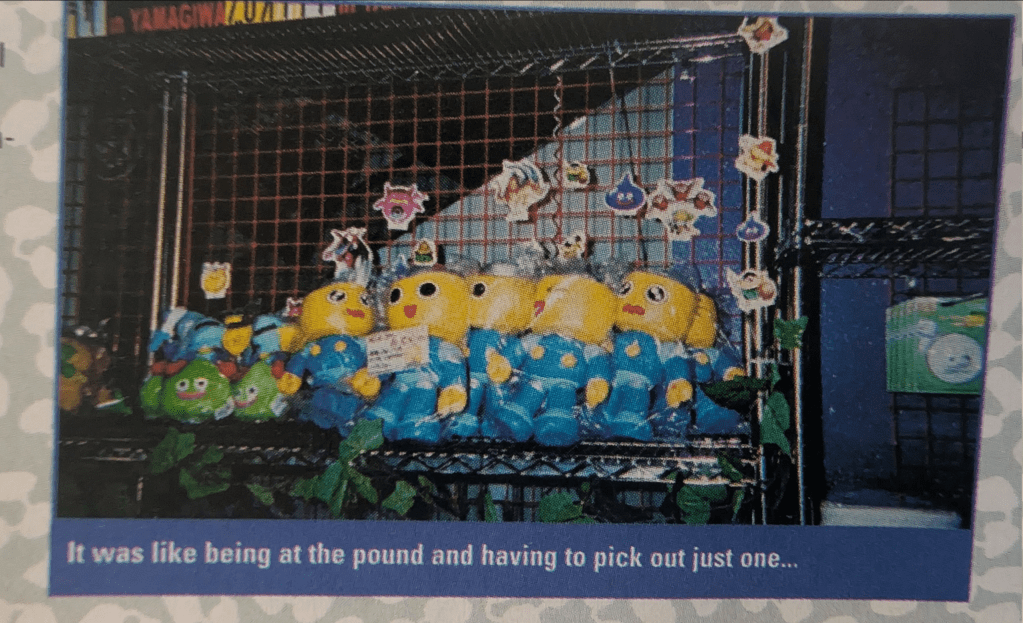
What else could be had? Actually, most of the $400+ I spent (…holy cats!) went toward obscure video game soundtrack CDs, which, as you know if you’ve been following along, I have a thing for. Locating the out-of-print Super Mario World and Donkey Kong Country arranged albums brought a tear to my eye, especially since the only MP3s I had of the latter were off of a second-generation cassette tape. Finally, in one store I was able to find a complete selection of game character goods. I passed up the cold cast Final Fantasy statuettes and Mog plushies in favor of a big plush Kobun (Servbot), whom I wuv vewy much.
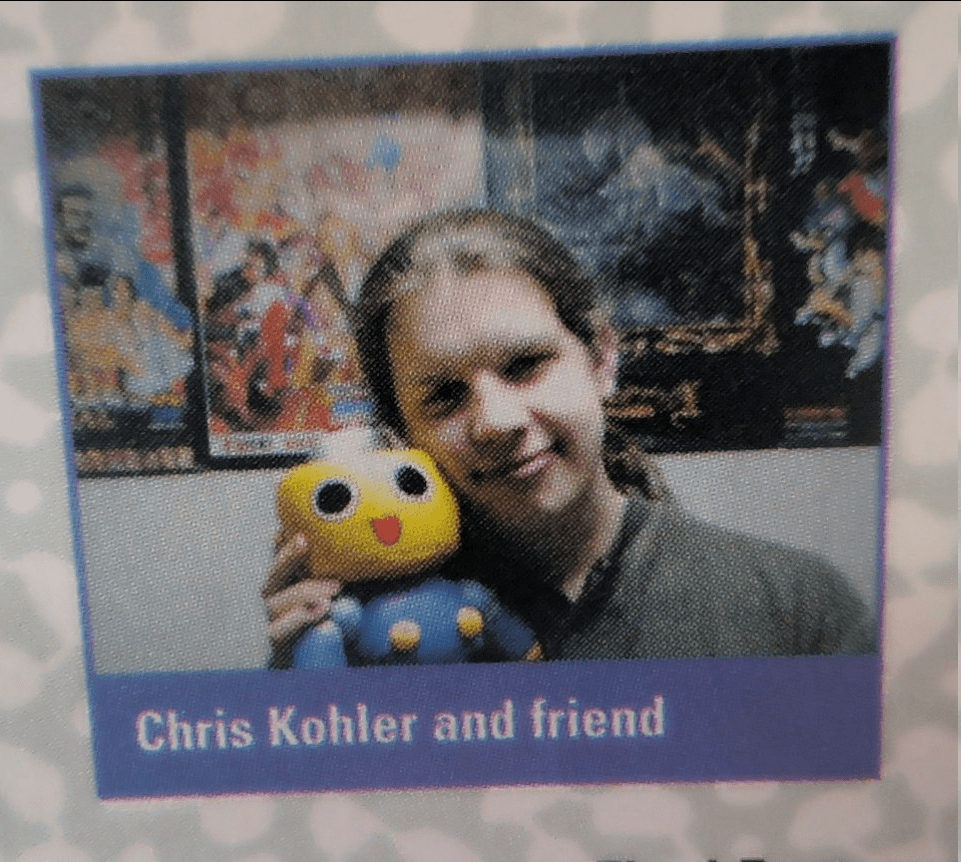
So, if and when I go back to Tokyo, where will I go for video games? The answer may surprise you: elsewhere. You see, after I had blown nearly all of my money in Aki, Kit and I went to Shibuya, where I found Dracula II for ¥200 (it sold in Media Land for ¥9,800). In other words, leave the games district and the selection might dwindle, but the prices are right. But of course, I’ll reserve another day for one last look at the wide-eyed wonder, the exhaustive selection, and the sky-high prices of Akihabara.
- *The exchange rate is roughly ¥100 = US$1.
- **A few weeks after I came back from Akiba, the Tokyo high court decision was reversed and used game sales became legal once again. That ruling had been in effect long enough, however, to shut down the legendary Sofmap used-game outlet.
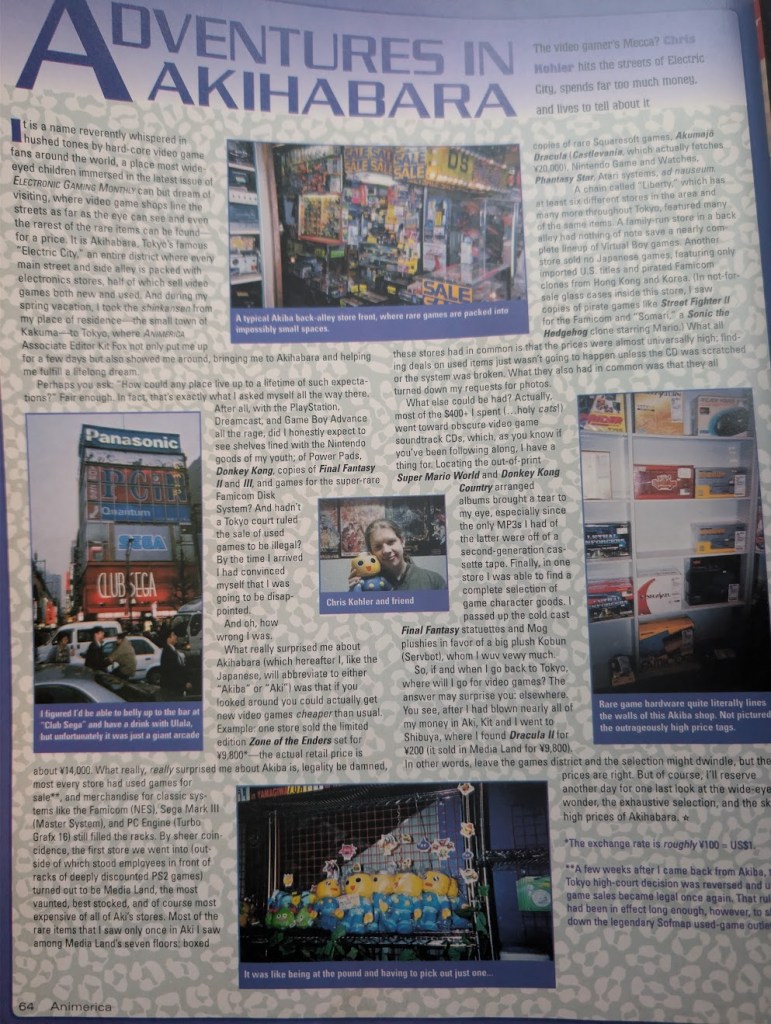
As usual, I’ll share a photo too of the page and article:
If you’ve enjoyed reading this article and would like to support me in writing more long-form features, Pages of the Past, and Adventure Logs, then you can do so on my Patreon, via Kofi, or picking up copies of my digital zine, Between the Scanlines.
 Scanline Artifacts