

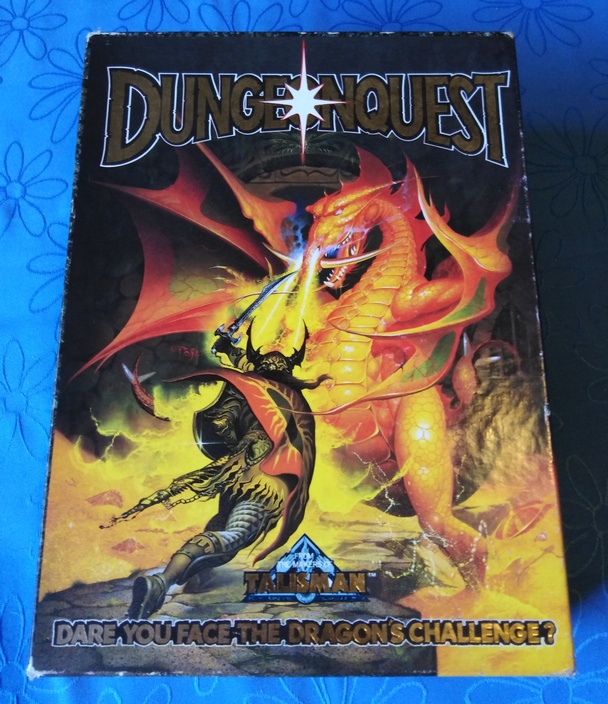
DungeonQuest! Merely speaking its name sends a shiver of excitement down my spine – and deep nostalgia. It’s also an artefact of the era when Games Workshop hadn’t quite solidified around their core Warhammer products as they have for a long time now.
A Myriad of Board Games
Back then, Games Workshop put out a lot of board games. Some were singular products while others were the core around which a handful of expansions would be produced. Or, in the case of Talisman, a LOT of expansions.
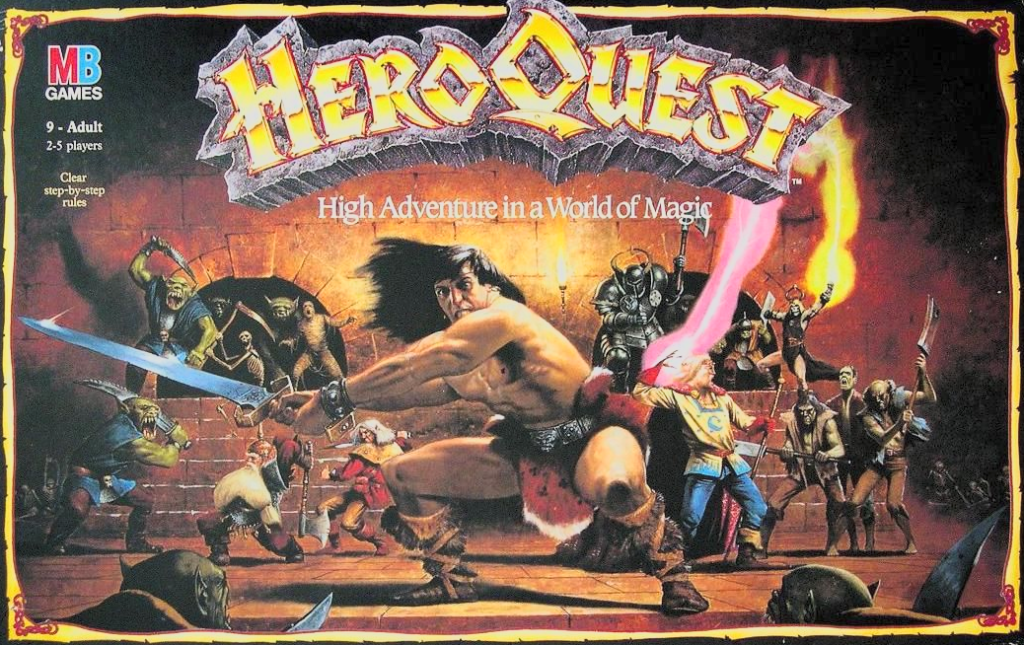
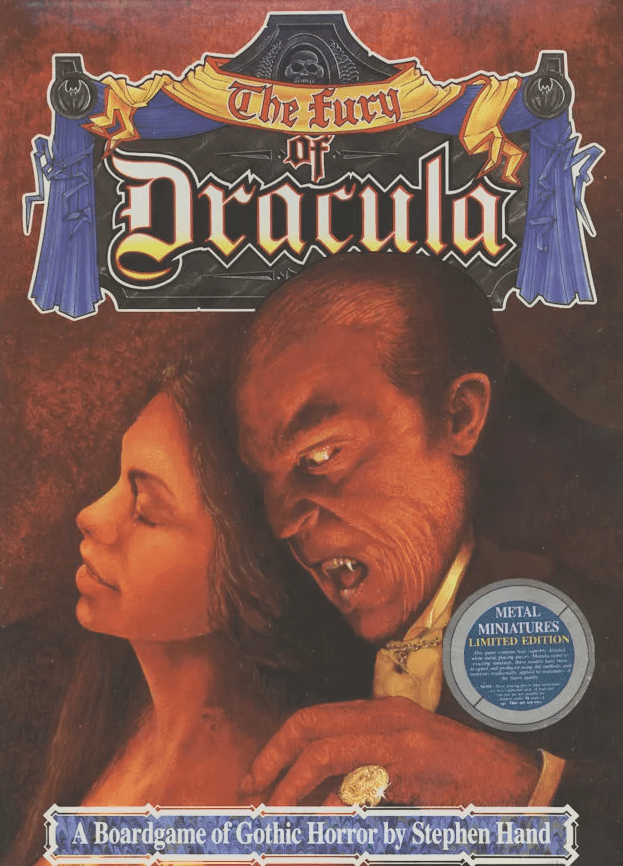
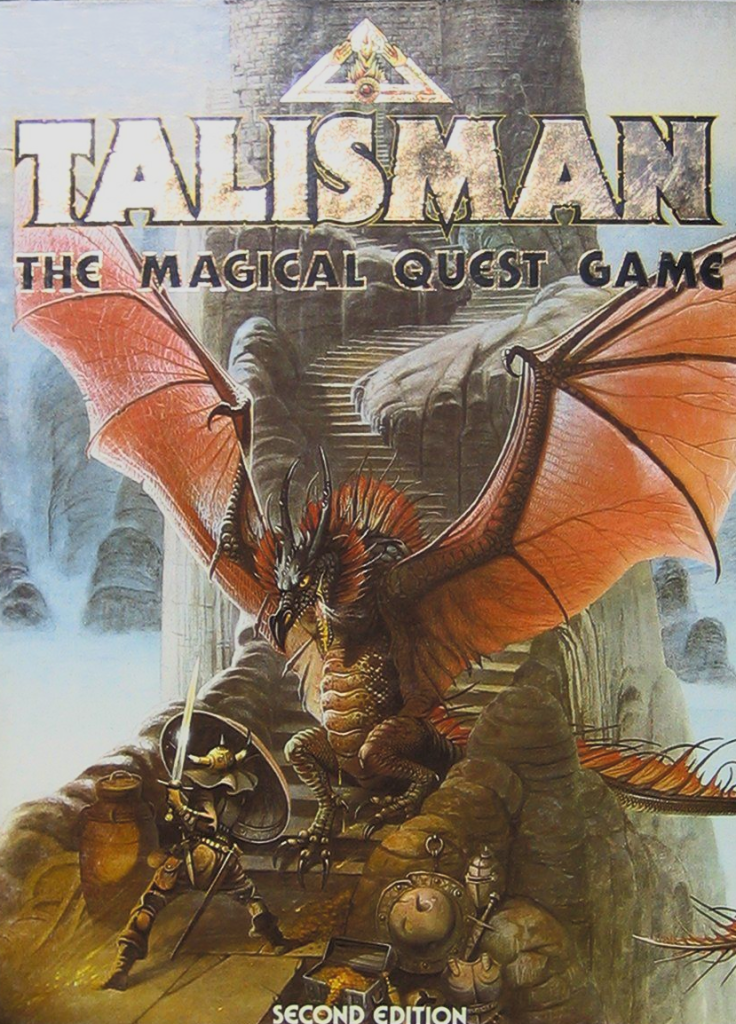

Some of them, such as Blood Bowl and Space Hulk, would go on to spawn their own franchises and/or be incorporated into the wider Warhammer universes. HeroQuest would become fondly remembered, and these days a new generation of players can enjoy it with a new edition in print.
The game I’m going to wax fondly about today began life not as a Games Workshop product but as a fine example of them localizing an existing board game. And a damn fine one at that!
Braving the Dragon’s Fortress
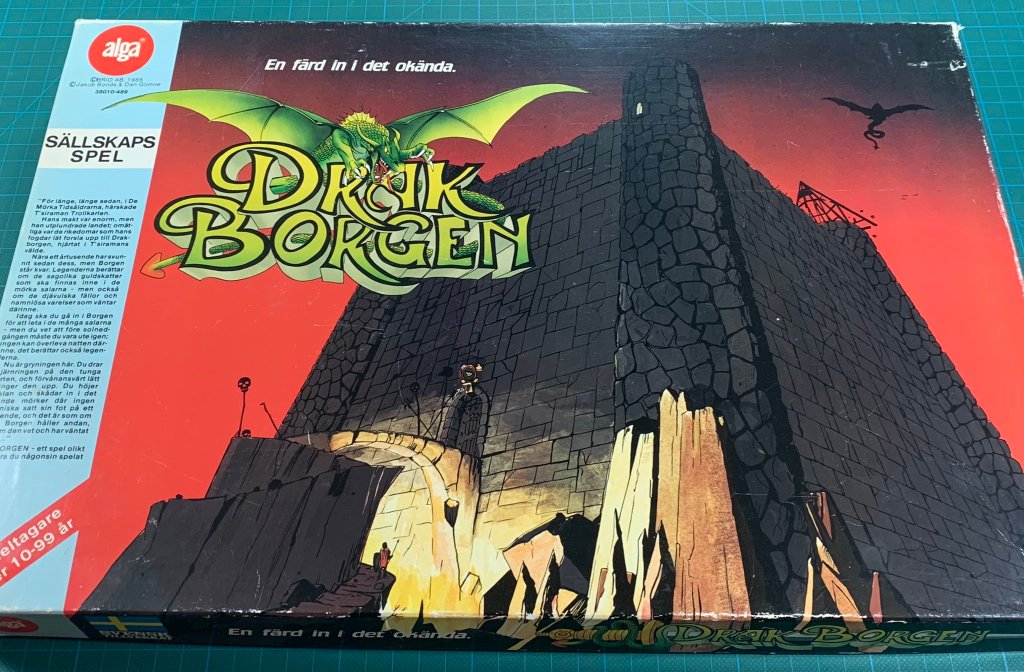
DungeonQuest is a localization of the popular Swedish game Drakborgen released a couple of years earlier in 1985. Just as in Games Workshop’s version, the game dares you to enter the lair of the sleeping dragon in search of fame and riches.
There is a lovely write-up on the original Swedish edition here (from which I snagged the box cover above!). I’d recommend giving it a read too.
Okay, back to DragonQuest. For illustrative snaps, I’m going to be using a Tabletop Simulator Steam workshop upload of the 1987 version and its expansions (released in 1988) that has been scanned in with painstaking attention to detail.
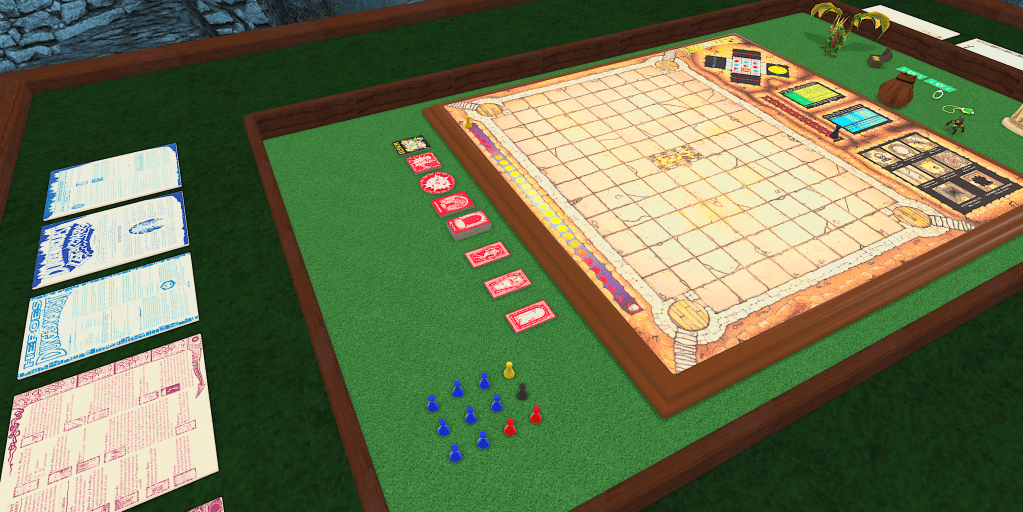
The premise is simple: you have 24 hours (turns) in which to venture into Dragonfire Castle, navigate its labyrinth of rooms and passages, and reach the treasure room at the heart of the dragon’s lair. Then you must count on fortune being on your side as you help yourself to as much of its treasure as you dare – and risk immediate fiery death should you wake it! Painful death also awaits you if you’re still in the castle after the 24th turn and night falls.

The rulebook does a nice job of setting up a backstory and introducing the four adventurers that you get to choose from. DungeonQuest can be both played solo and with up to three other players.
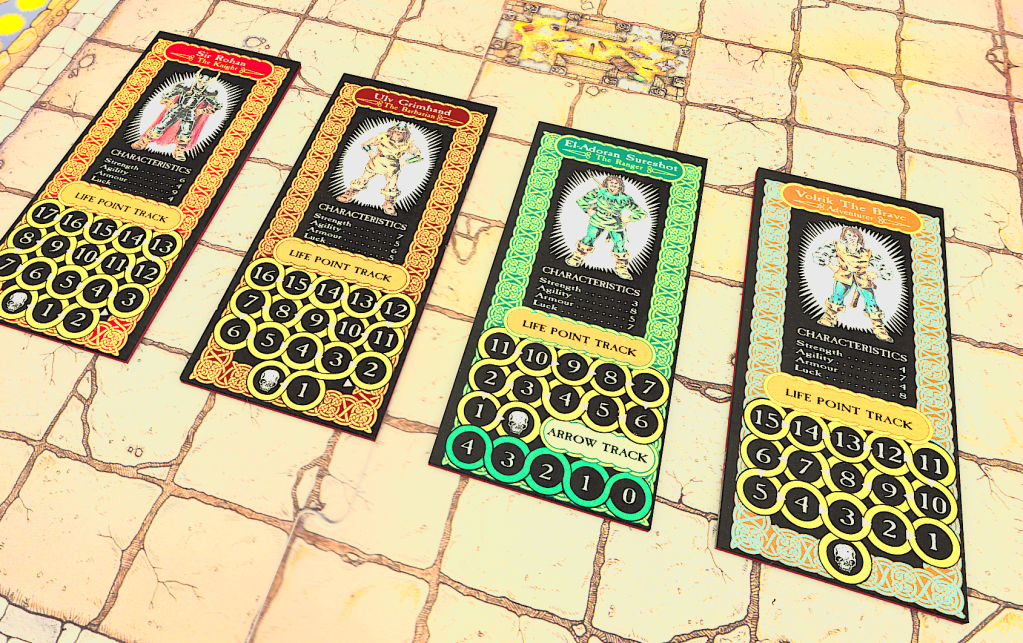
Each of them have their own advantages and disadvantages; Sir Rohan is well-armoured and sturdy, but has poor agility and is prone to misfortune. Volrik the Brave is nimble and quick but lacks his knightly rival’s sturdiness. You also get to choose a magic ring to try and even the odds, such as one that will heal you or one that will warn you of oncoming danger. However, each ring can only be used once, so choose wisely!
The Heroes of DungeonQuest expansion would introduce a lot more, many of them with more complex character mechanics and abilities as well as gender-swapped versions of the original four.
For this demonstrative session, I chose Volrik.
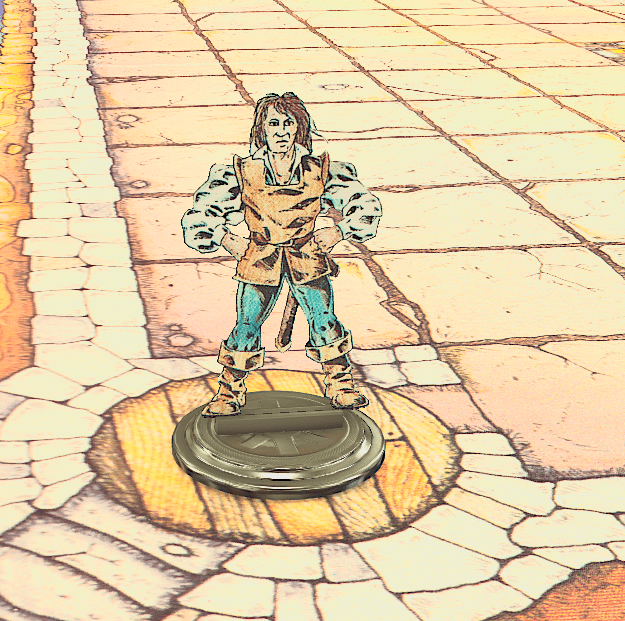
Each adventurer starts their expedition in one of the four corner towers. Then, at the start of each turn that you decide to move onto one of the blank, unexplored squares, you blindly pick one of the face-down room tiles and place them down in the direction you’re going indicated by an arrow on the tile.
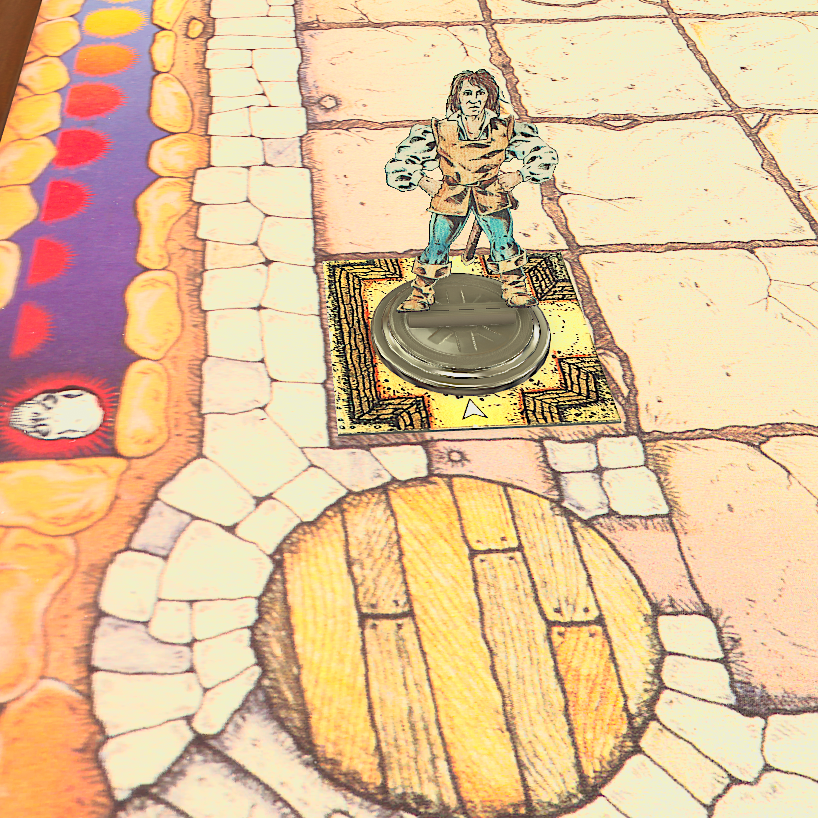
This immediately adds immense replayability to DungeonQuest as there are a huge variety of tiles, some with unique hazards. Your expedition into Dragonfire will never be the same twice.
This tile has no such hazard, but that doesn’t mean it’s empty! Under most circumstances, when you enter a room for the first time, you draw a ‘Room Card’ to determine if anything awaits you!
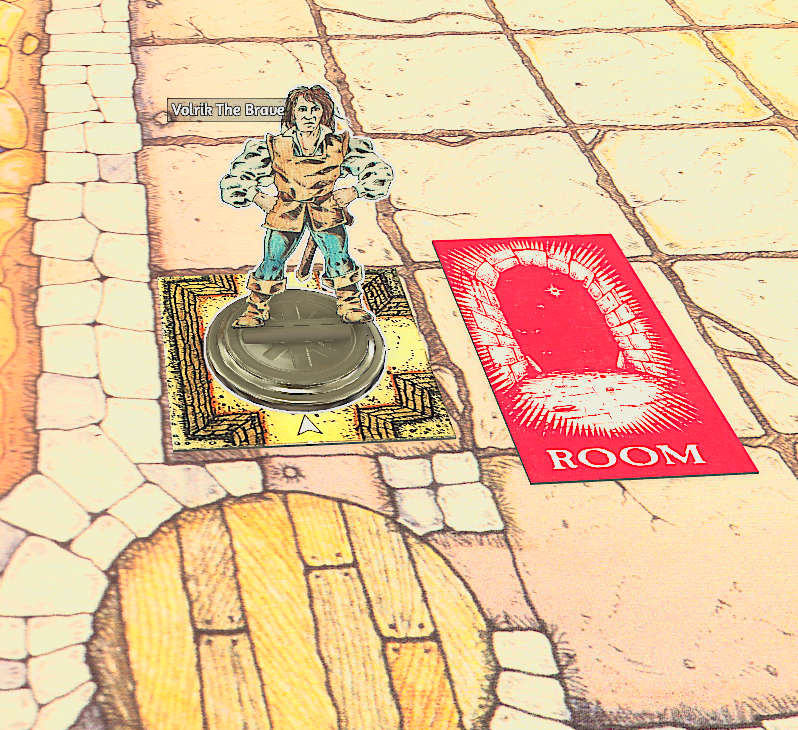
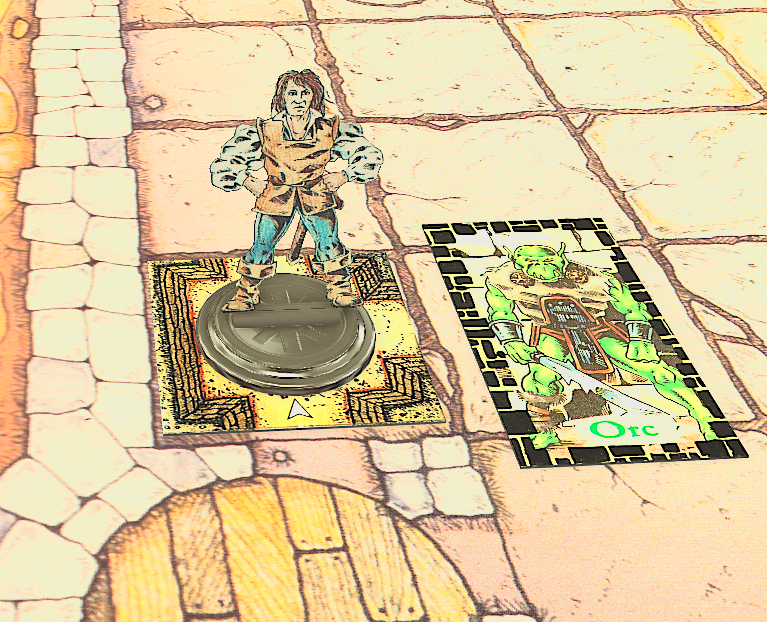
Uh oh. An orc has claimed this chamber for its own, perhaps waiting to greet the next foolhardy adventurer who steps foot in Dragonfire.
This is perfect timing, as now I can showcase the combat system. It’s pretty simple stuff and takes two forms: a rock-paper-scissors combat system where another player takes on the role of the opponent or a simple roll of the die to see what happens for solo players. But, before any of that happens, we get to make a choice: do we attack the orc, wait and see what it does first, or flee?
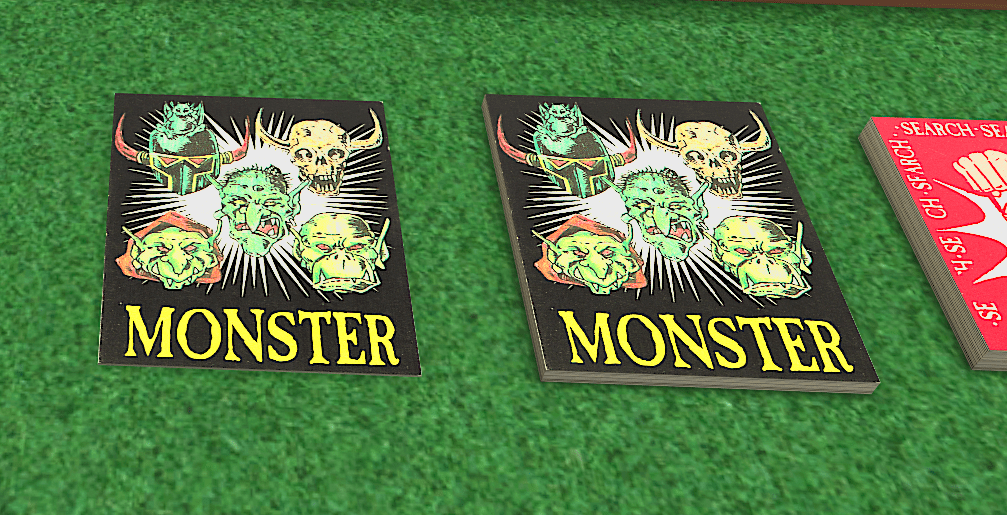
A Monster card is drawn and flipped over. In a multiplayer game, another player secretly takes a card and waits for the choice to be made first. On the back of the card will be the monster’s reaction and the amount of life points it receives should it result in combat.
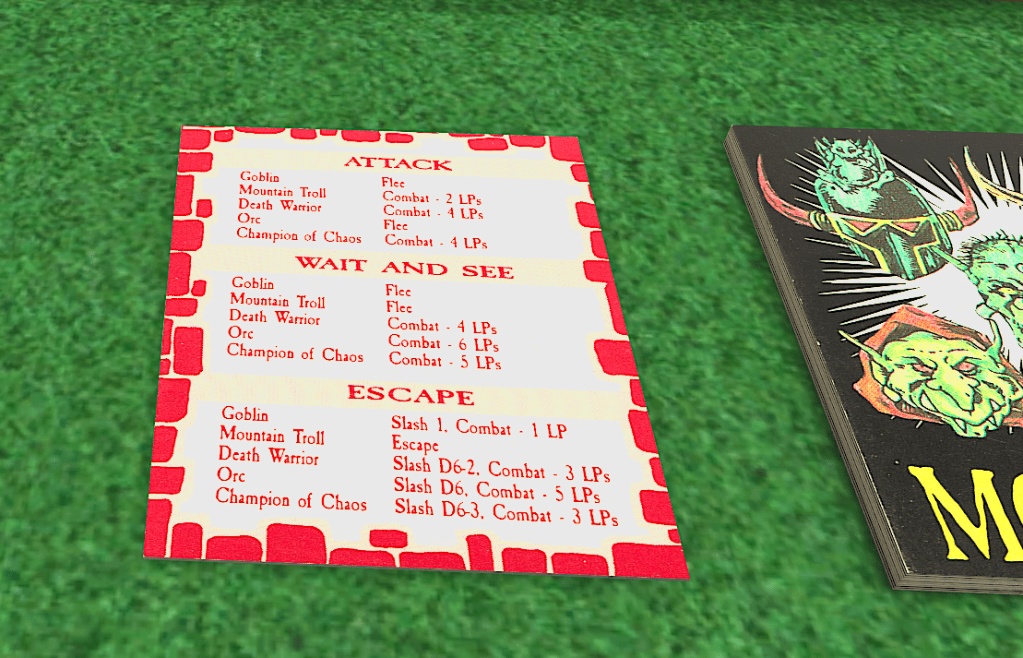
So, in this example, we see if we chose to attack the orc, it would turn tail and flee for its life! But, if we decided to do the same, it would take the opportunity to get in an attack against our craven hide and do D6 LP damage before the battle starts! Then it would have a beefy 5 LPs when combat begins. Oof!
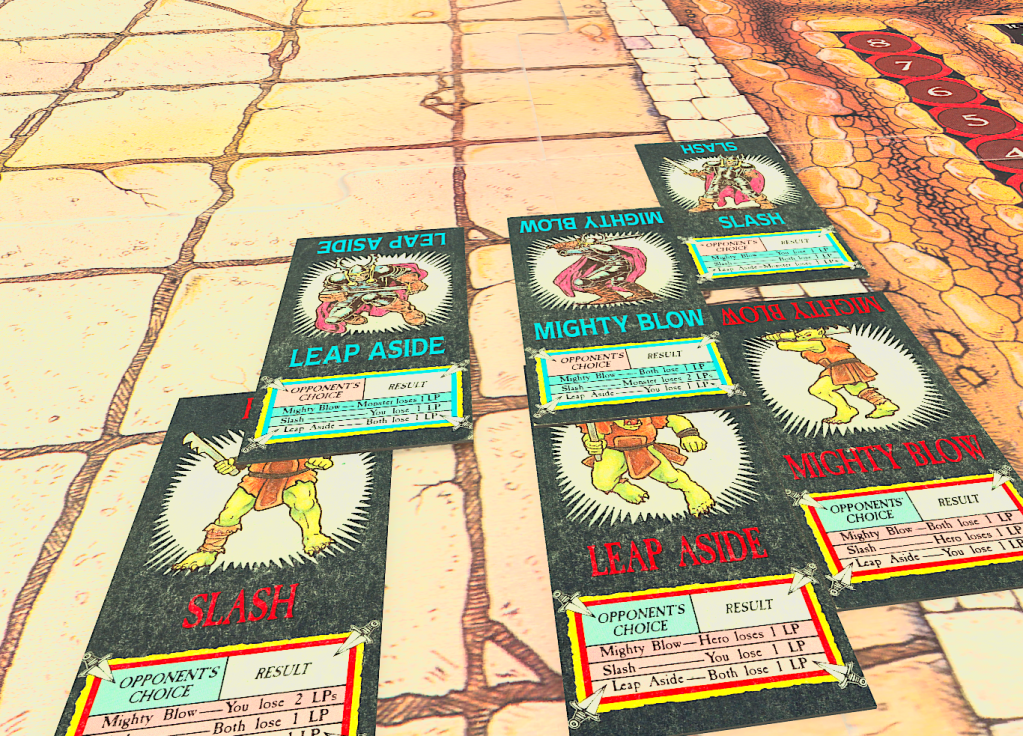
Combat rounds are brisk, with the players taking a three-card deck each and declaring to either Slash, Leap Aside, or deliver a Mighty Blow at the same time. Then you consult the chart on the board border or the cards for the result. For example, if Volrik had declared they were striking hard with a Mighty Blow and the orc had declared a Slash, then it would be Volrik who would lose that round and take 1 LP damage. If the orc had Leapt Aside, then Volrik would still have caught it with a glancing blow for 1 LP.
It’s a fun system that allows for dramatic flourishes, having a bit of a laugh, and roleplay. In the solo version, you simply roll a die for adventurer and opponent and that determines what happens.
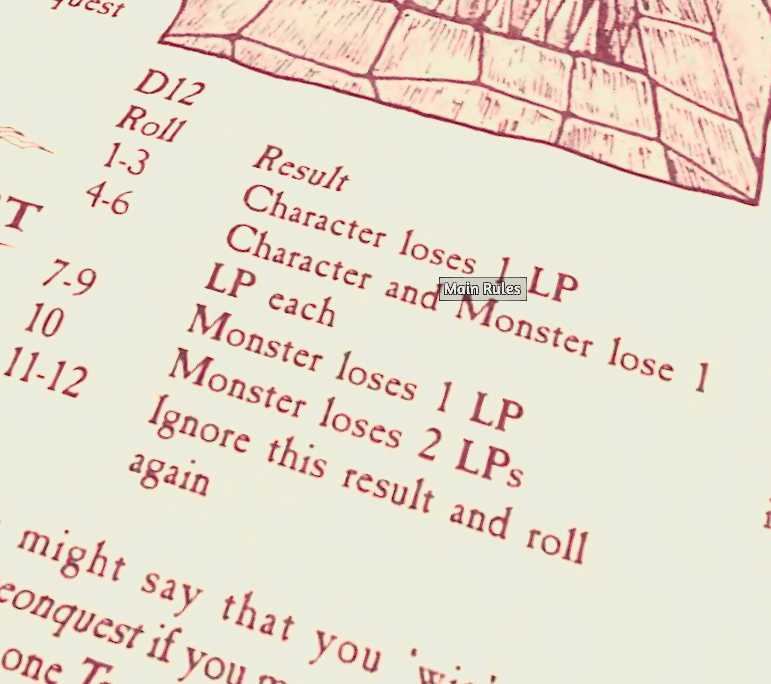
In my situation, Volrik had decided he would try and scare off the orc with imitating a mighty barbarian warcry and charge out of the darkness – which worked! The orc was so surprised that it dropped its scimitar and ran off as fast as its legs could carry it!
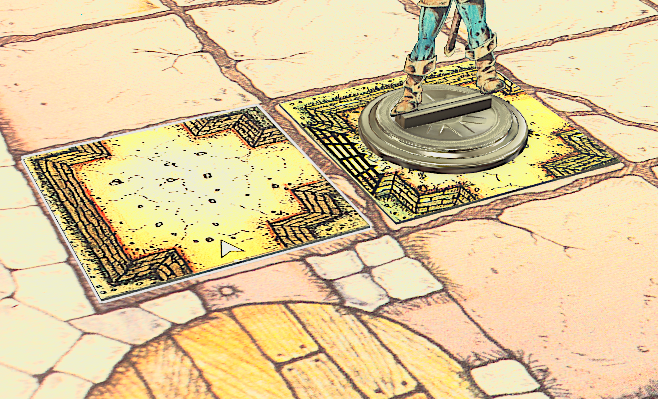
Uh oh! Volrik then encountered one of the environmental hazards: a portcullis slammed down behind him the second he entered the next room! If he hopes to return that way, he’ll need to roll under his Strength stat on a D12. Not an easy task for someone as slender as him! And as if to add insult to injury, the portcullis jumpscare made him drop his torch which put it out.

Consulting the card and tiles reference book, we see that we need to light it again before we can move on, doing so on the roll of any 3 numbers we pick on a d6.
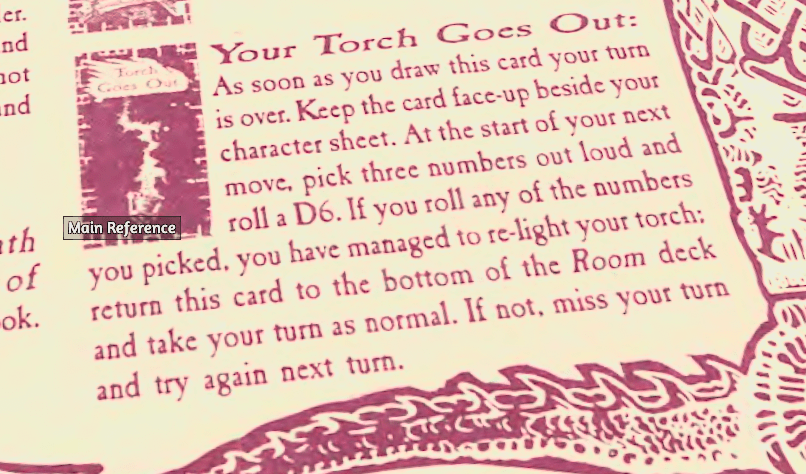
This is where unlucky dice rolls can really screw you over. The clock is still ticking and precious turns may be wasted trying to light your torch. I picked 1, 3, and 6, and it took two of them before Volrik could successfully relight it!
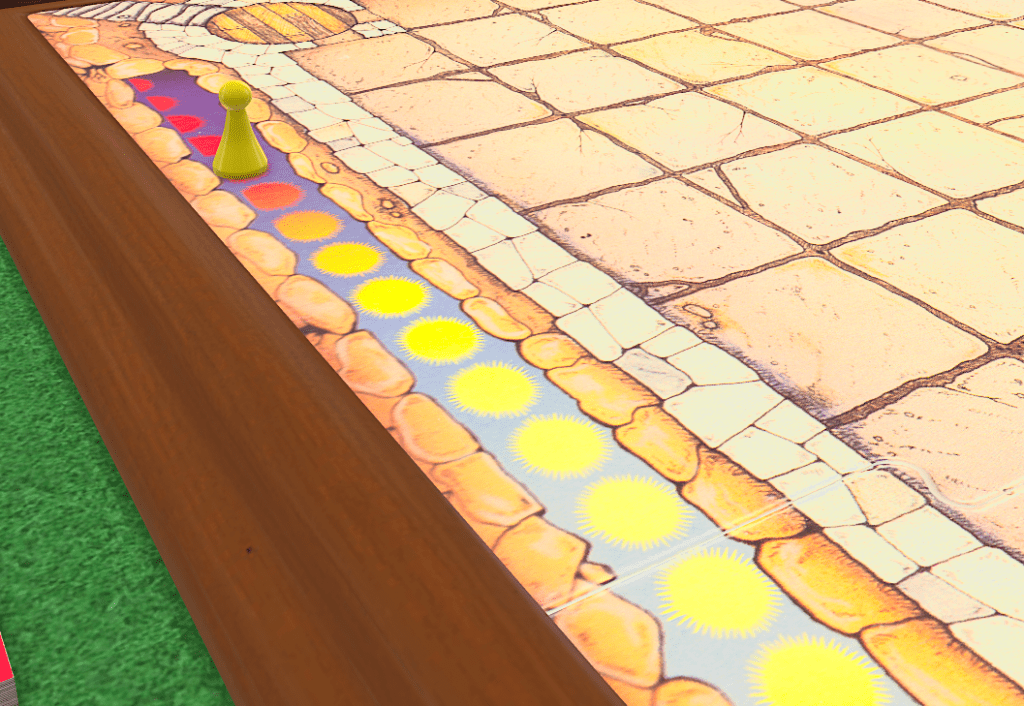
Muttering to himself and cursing his clumsy fingers, Volrik ventured on, finding an ancient, cobweb-draped crypt in the next room.
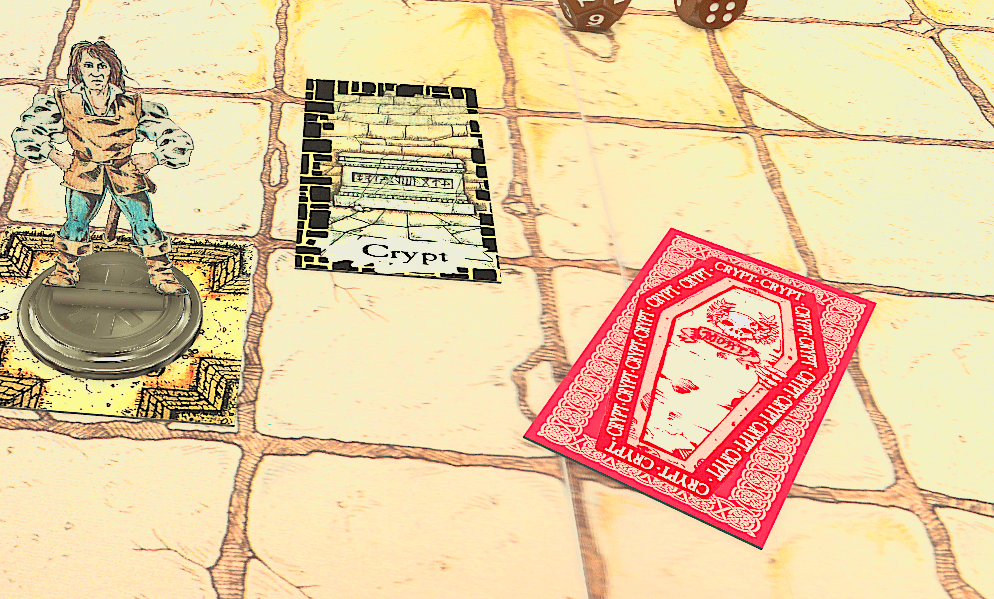
With curiosity and greed too strong for our plucky fortune-seeker to resist, he pushed aside the stone lid and found… nothing!
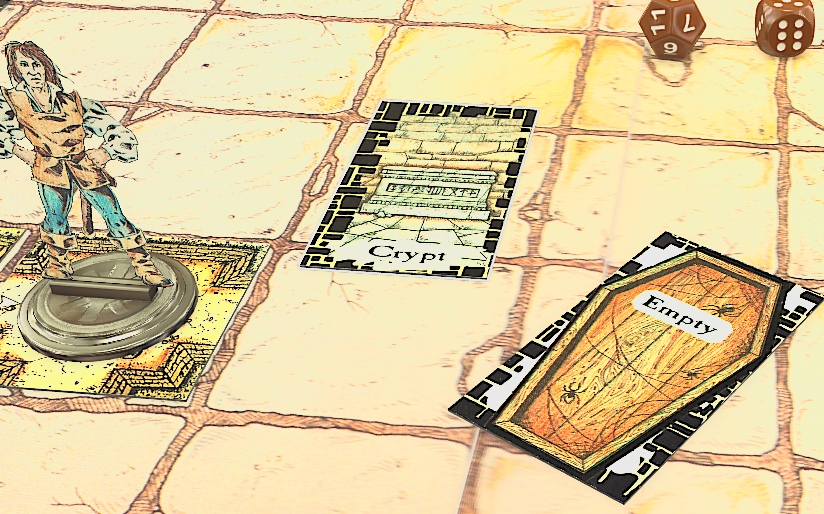
Alas, for having such a high Luck stat, good fortune eluded him twice over. Not only did another portcullis slam down ahead of him but he felt and heard mighty gears turning as he entered a circular room – a rotating chamber! The way he came would now be lost to him as the doorway from which he entered was replaced by a blank wall and a new one opened up ahead of him.

After narrowly escaping being crushed by a cave-in and almost falling off a narrow plank over a chasm, Volrik stood in the antechamber leading to the sleeping dragon’s lair. Swaying in place, bruised and battered and wondering if he had been cursed with the worst luck ever, Volrik could hear the breathy snoring of the beast guarding its fabulous wealth. Dare he enter with such ill-fortune dogging his every step?
He dares!
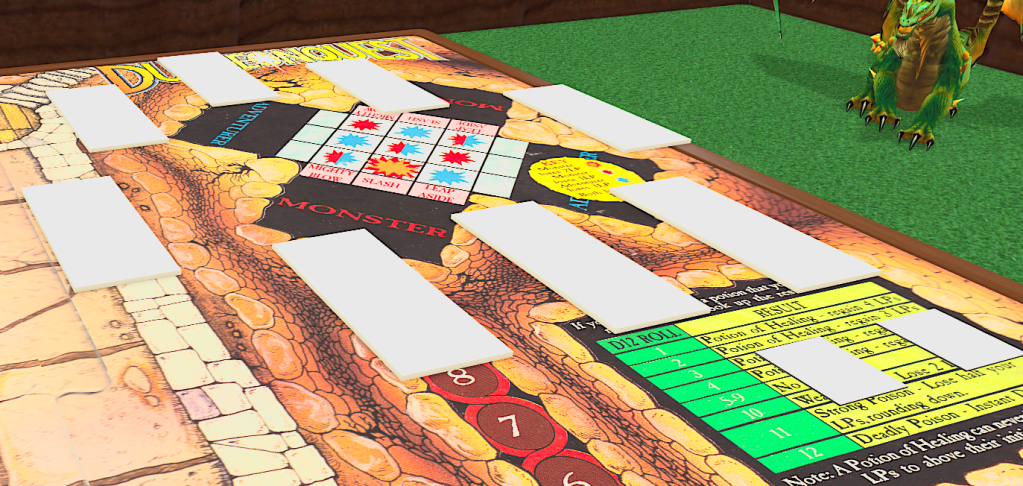
Each turn you spend in the dragon’s chamber, you are allowed to take two pieces of treasure from the hoard represented by tiles. But! You must also turn over one of the eight dragon tiles at random. Seven of them are safe – one is not! And each turn you spend grabbing treasure, the more you whittle down the safe ones as they remain turned over! So it’s very much a risk-reward thing.

Volrik stuffed a moderate amount of gold pieces into a sack, ever watchful of the sleeping green dragon sprawled out on top of it. Wary of even the slightest sign it was waking up. Thankfully, it did not! He grinned; perhaps now his luck was changing for the better!
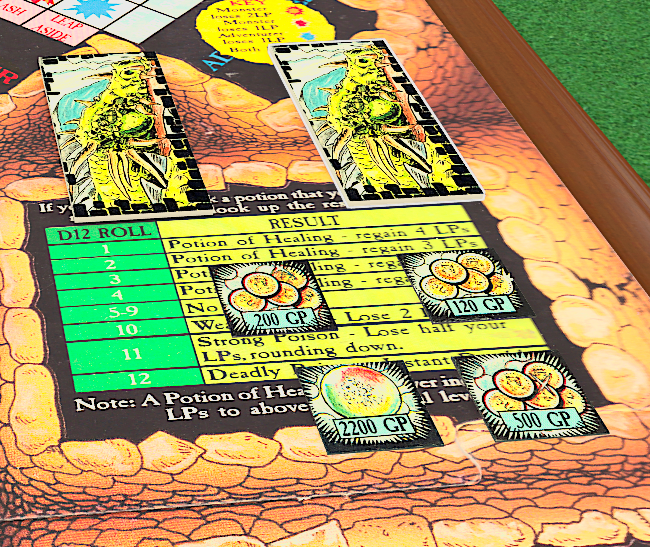
Yes, it seems it was! His grin grew wider still as he lifted up a fabulous orb radiating expensiveness and stuffed another handful of coins into a sack. The dragon remained asleep, but… was that a flicker of an eyelid or simply his imagination? He decided to risk a few more moments in the chamber, avarice his guide as he lifted a gold chain necklace and…
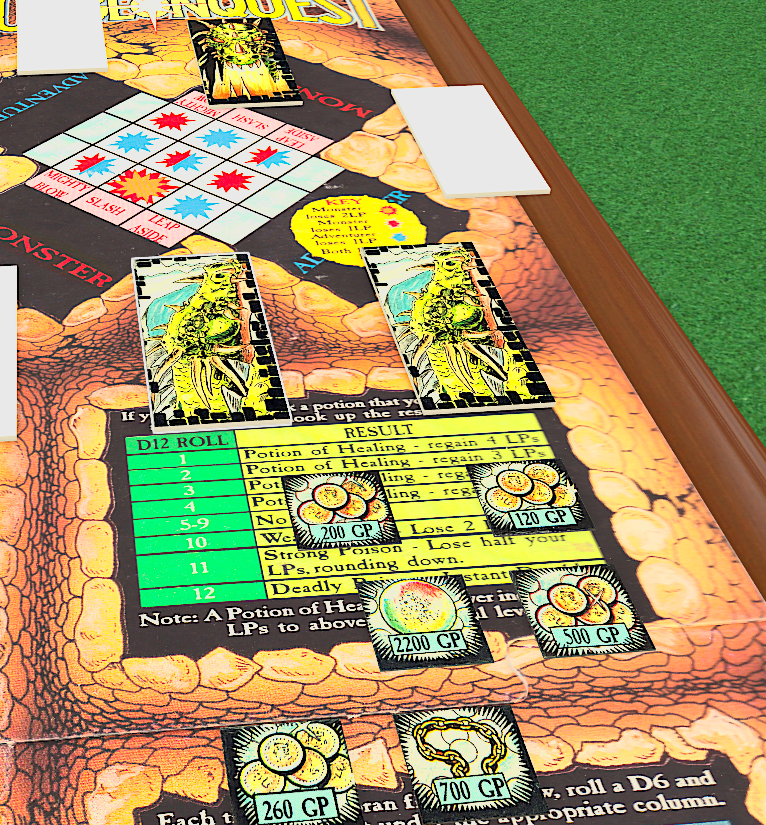
… woke the dragon.
With an angry roar, alerted by the jingling of the chain and the spilling of coins onto the stone tile floor, the dragon rose before Volrik and unleashed hell-flame upon him. “Oh bugger,” was the last thing anyone in earshot would have heard him utter before he became 1000% more crispy.
In Conclusion
DungeonQuest is still one of my favourite lite-RPG board games and makes for a fantastic multiplayer experience. But, there is such a heavy amount of RNG involved that personal skill rarely enters into the equation. 95% of the time, you’re at the whim of a dice roll, a tile pull, or a card draw. So, for those who do not enjoy the winds of (mis)fortune being the core mechanic of a game, it may not be for you. But for those who do, you’re in for a treat. I barely scratched the surface of the challenges you can face, so there’s plenty more to uncover.
Sadly, despite Fantasy Flight Games picking up the licence for a new edition that reworked some of the rules (especially combat!) and gave it a fresh coat of paint in 2010, DungeonQuest in any form remains out-of-print. Complete editions of both versions are hard to come by and expensive. So I have no qualms about recommending the Tabletop Simulator implementations. The one I’ve used for 1987 DragonQuest (my preferred edition) for a good few years now incoporates both the Heroes and the Catacombs expansions. Catacombs adds an additional layer of danger and exploration with a subterrean maze and new hazards and rooms.

The original Swedish Drakborgen game remains in print with both a Classic version and one that seems to have evolved into a full-blown TTRPG, with its most recent version releasing in 2022.
Should you play DungeonQuest, I wish you good fortune, a dungeon layout that favours you, and an especially tired dragon!
 Scanline Artifacts