


HeroQuest! Fabled Christmas/birthday gift present of legend! It’s something I have a good deal of nostalgia for with it being my main pressie for Christmas of 1989 following months of excitement fuelled by ads such as this one. And thanks to a 2021 re-release (and subsequent new expansions!) as board games have exploded in popularity over the last decade, HeroQuest is something you can once again pick up off the shelf of your local toy or hobby store.
But what about HeroQuest computer games? Let’ us briefly delve ino their history before we embark on our adventure with one.
Questing in the Lands of the Microcomputers
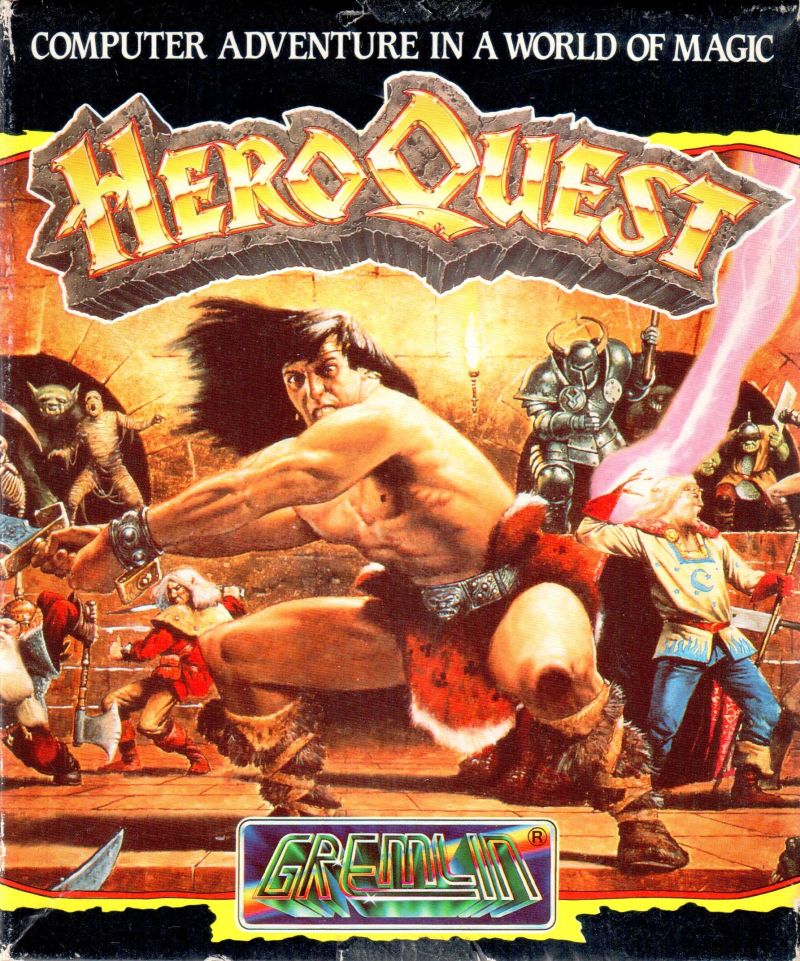
So far, no new HeroQuest video game adaptation has been released. So, to enjoy it via electronic artifice we must wind the clock back to the 90s to locate not one but two games. The first HeroQuest game made its way to home computers in 1991, dispatched by those stalwarts of the microcomputer scene, Gremlin. It was exactly what a lot of people wanted, including myself: a faithful adaptation of the board game that played exactly like the board game. Retrospectively, and much like the adaptation of sister game Space Crusade, perhaps a little too faithfully?
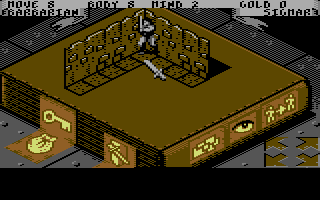
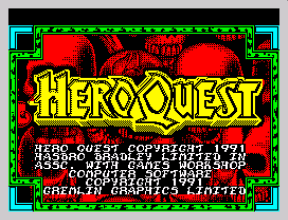

Cut to a couple of years later and I, now a happy Amiga owner, started seeing previews for a new HeroQuest video game, a sequel: HeroQuest II: Legacy of Sorasil. Oh, excuse me, Legacy of Soracen.

You can bet I was excited! And a wee bit confused too; where was the HeroQuest II board game?
Sorasil would take a good while to boil in Gremlin’s cauldron. It wouldn’t be released until 1994 following periods of development hell. At one point, the HeroQuest name vanished from promotional material as licensing became uncertain and was simply referred to as Legacy of Sorasil. It would explain the hodgepodge of stuff that more explicitly ties it to the Warhammer Fantasy universe and other elements that do not.
So, how does Sorasil hold up these days? And how did it innovate on the early title?
We march for ADVENTURE!
I fired up Sorasil earlier today on our Amiga 600, the same model of Amiga I had when the game was first released. I’ve dabbled in it here and there on WinUAE in years past, but have never really sunk much time into it and cannot remember the last time I gave Sorasil a bash. So, I went into this ‘Adventure Log’ session to investigate it more closely with a clear mind and no expectations or nostalgia.
As the game boots up, we also see an artefact of the time it was being developed without the HeroQuest licensing: There is no mention of it being one in the little intro proudly displaying the game’s name. It does however proudly proclaim itself to be HeroQuest II on the game box.

Then it’s onto the main menu – and being hit with some pretty damn cool music. It’s adventurous and bombastic but then shifts into a gentler and moodier melody.
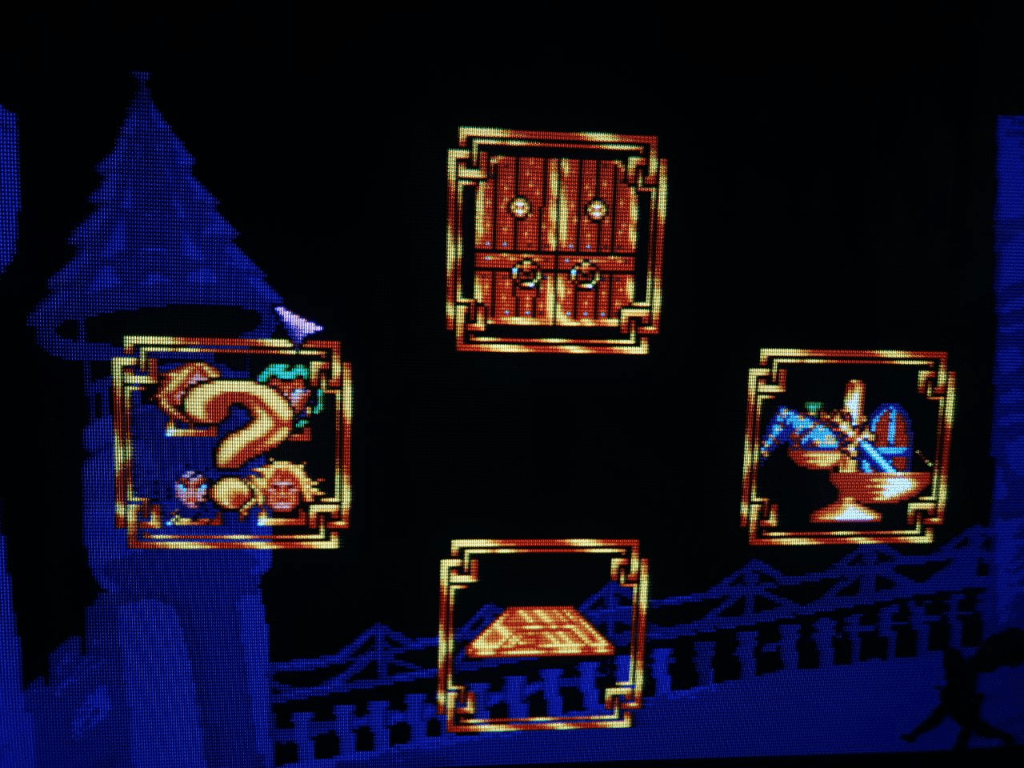
You’re presented with an iconographic menu familiar to anyone who has played the previous HeroQuest game or Space Crusade. Four choices… the first of which should be the one on the left: character selection.
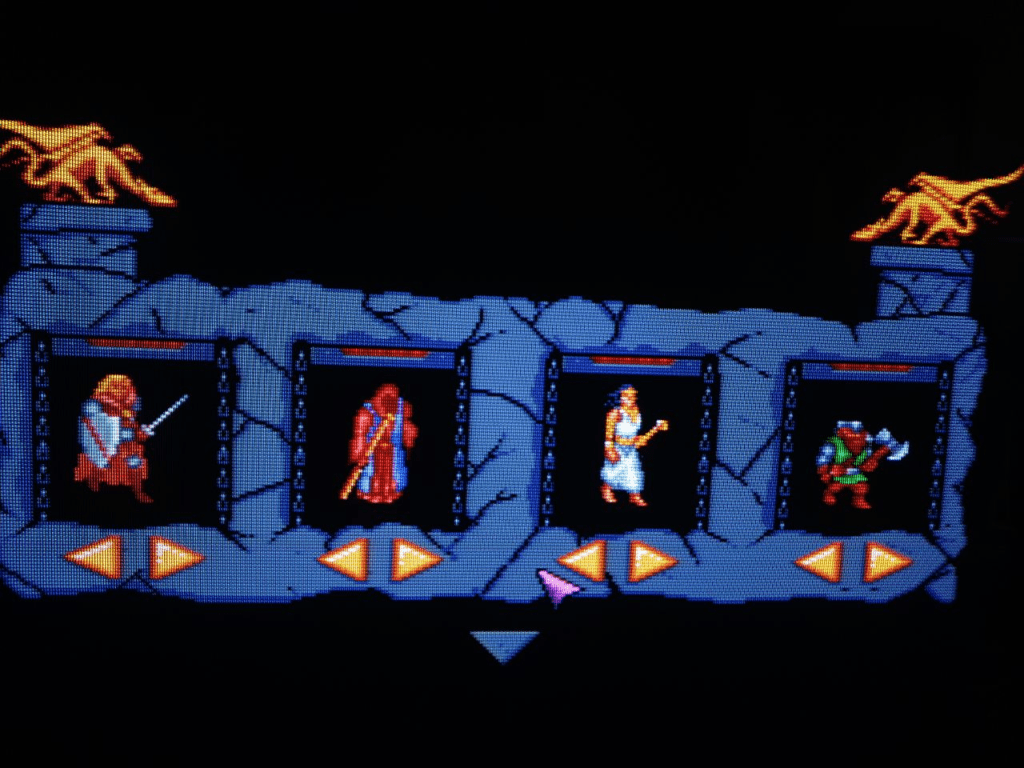
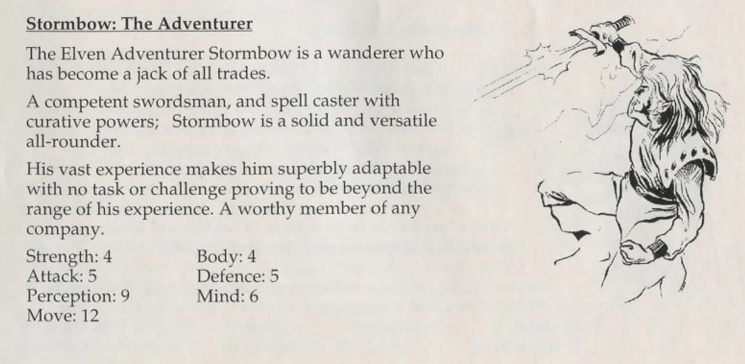
Sorasil doubles the roster of available characters from four in the original HeroQuest to eight – very welcome! The manual does a good job of adding some background flavour to the roster, and it’s pretty useful for sussing out who is who and what their vital statistics are as this screen presents only their sprites.
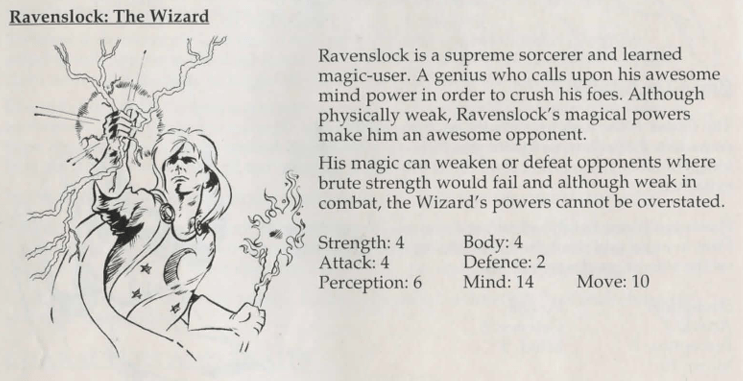
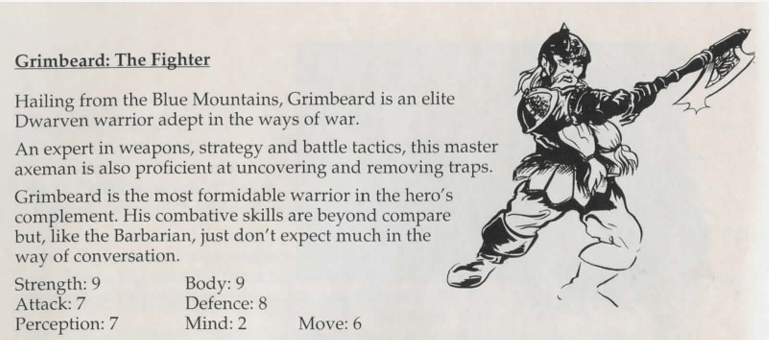
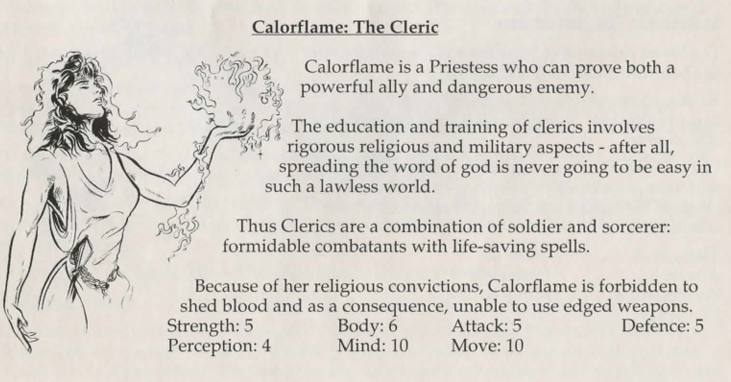
Then it’s off to the ability point generation screen via the rightmost icon on the main menu.
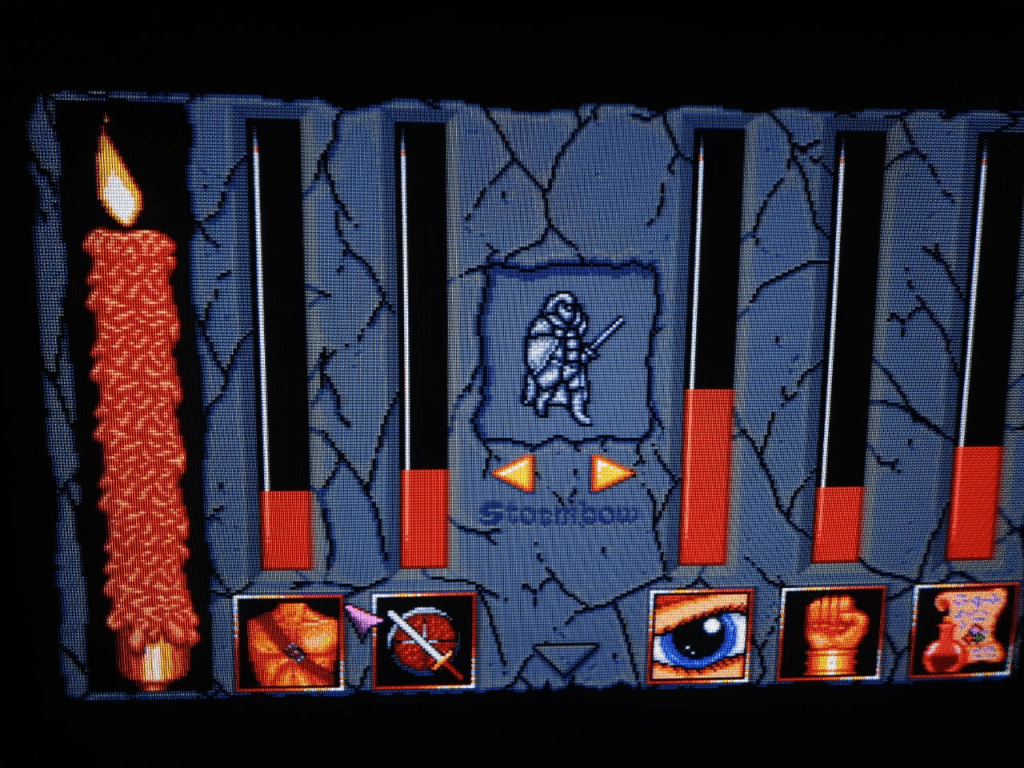
Here you see their names and vital stats represented in bar chart form: Body, Attack, Perception, Strength, and Magic. And each of your adventurers has five additional stat points to distribute among them.
Here was the first stumbling block: which one is which? And what exactly do they represent? The character profiles present them out of order, and you’ll remain mostly ignorant of the latter as the manual doesn’t tell you what game mechanics they govern. It just assumes you already know or can guess how they will influence gameplay. Does Perception affect your chance of landing a successful blow? Is Attack your chance to hit? If you’re an experienced roleplayer, you might also go in with preconceived notions of how they work – like I did. Magic, I assumed, would be a consumable resource like MP.
I picked Stormbow the Adventurer, Calorflame the Priestess, Grimbeard the Dwarf, and Ravenlock the Wizard. A Melee DPS, a Healer, a Tank, and a Magic-User DPS, to put it in MMORPG terms – perfect! So, with bonus stats distributed, mostly to their ‘primary’ characteristics, I clicked the top icon to depart on my first adventure.

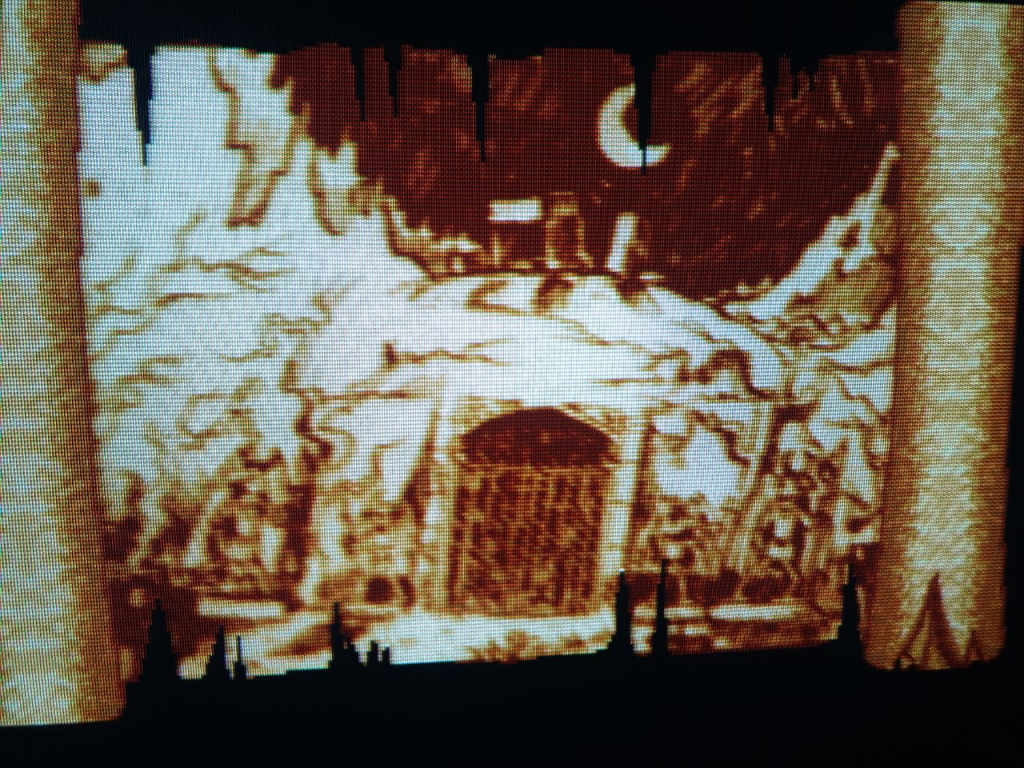
The game presents its adventures via the map above rather than picking from a text list as in the original game. It’s very nicely done and reminds me of the campaign map you see in the mid-90s Warhammer Fantasy Battle game, Shadow of the Horned Rat. Right now at the start of the game, there’s only one location open to us: The Barrow Mound of Yaserat.
We must pass through the Barrow Mound and the Valley of Sorrow to reach our ultimate destination. How, uh, welcoming it sounds! Within this valley lies the tomb of Yaserat, an infamous Vampire-King of legend. But to pass through his Door of Skulls, we need the Key of Bone guarded by a golem named the Warrior of Stone, invincible to mortal harm unless engaged while wearing the Ring of Elements and…
Oh my gawd, that’s a lot of ‘Something of Something’. The storytelling is a wee bit tawdry, regaling you with all this in two screens of fantasy script and is honestly a bit intimidating for what is usually a smaller and simpler adventure for someone’s first one!
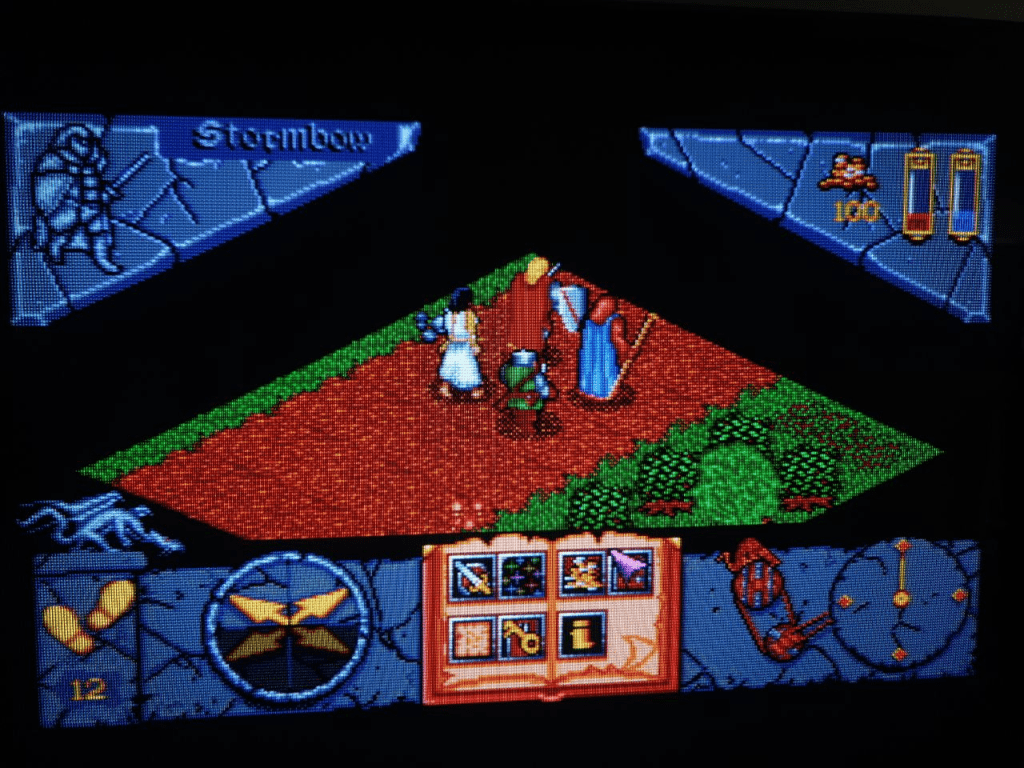
My party arrived at the woodland outskirts of the barrow, travel-worn but eager for their first taste of combat and treasure. It’s here we can see just what kind of game Legacy of Sorasil is. Like the original board game adaptation, this sequel is turn-based and isometric. But unlike that game, there are no dice rolls or coin spins to be done. Not a single one! Instead of rolling a dice to see how far you move (always an annoying mechanic in the first game!), you have a fixed amount of movement points. Each adventurer has twenty action points overall, represented by the rat on a treadmill next to the stone clockface on the bottom point. Using a movement point will also consume a single action point in tandem, so consider this before sprinting ahead with your full move allowance.
Advancing with Stormbow, I ran into the game’s first flaw: The camera is fixed on your character and they can only see a single tile ahead of them when it comes to peeling back the fog of war. I couldn’t find a way of freely panning the camera around, and you will frequently be in the dark about what lies ahead of you. As if to mitigate this, the area map will indicate enemy positions for your immediate area and the one ahead of you. So, some preparation and planning can be made but it’s still a little awkward. I do like how the map is drawn like how an adventurer might scrawl one on a bit of parchment.

As Stormbow cautiously made their way through the forest, alerted to the presence of skeletal foes by the clacking of their jaws and the creak of their ancient bones, he almost bumped right into our first foe.
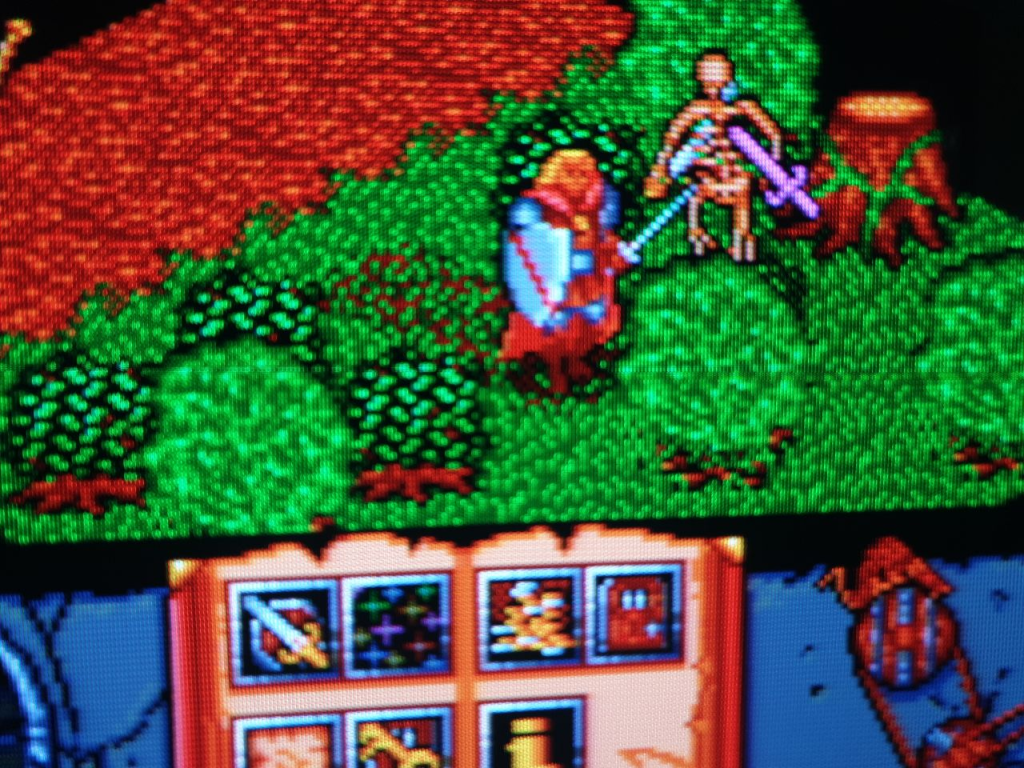
Here’s one of the design decisions I appreciate: You can attack as many times as you have action points remaining. The manual is unnecessarily vague about the costs of actions beyond musing that it may cost ten points to search for treasure or traps/hidden doors. I think it may be either three or five to attack, but I’m still not sure after this initial revisitation. On average, you’ll get to unleash three attacks on a turn. This greatly speeds up the page of an otherwise slow and methodical game. Enemies are restricted to a single attack per turn.
Here’s one of the design decisions I don’t appreciate: Unlike the first game, Sorasil obfuscates combat rolls, leaving you clueless about how the success of landing a successful hit is determined. It’s as if they wanted to hide its board game origins by simply not showing you. Your character and their opponent will flail around in attack animations and you’ll simply hit or miss. The only clue that you’ve successfully landed a (potentially) killing blow will be that the attack animation will play out an extra time and transition to a death one if it’s a weak enough opponent. There are no sound effects; no clash of blades, grunts of pain, or triumphant yells. It leaves combat feeling a wee bit inert and without much feedback.
On Calorflame’s first turn, I discovered a nasty little surprise: our healer begins her adventures with no healing spells. Just a stick and the kind of stats that would make engaging in melee with it a bad idea. This… was not what I expected of our cleric!
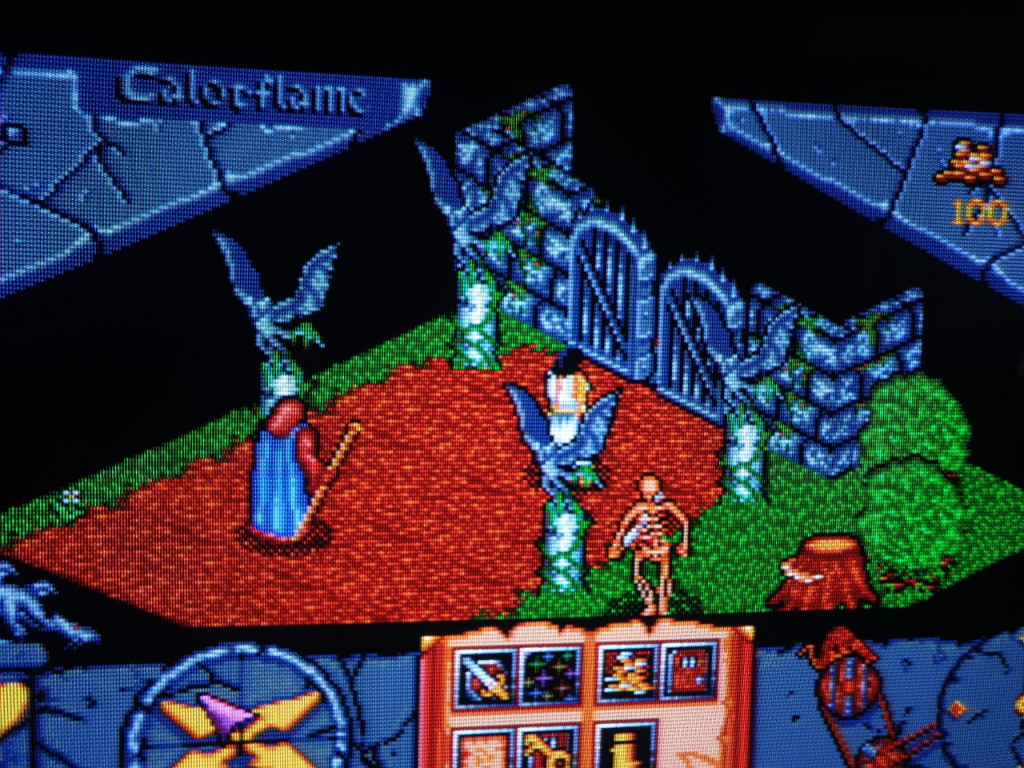
The iron-wrought doors of the barrow loomed ahead. Calorflame (which automatically morphs into Calorgas in my head) gripped her staff tighter as she approached them, feeling as if the stone gargoyles flanking them were watching her. She did her best to ignore the skeleton to the right as one of her comrades moved in to tackle the restless dead.
Inside the doors lay a stone maze, no doubt constructed deliberately to confound would-be intruders… such as ourselves.
Turns out, the most confounding thing would be our turn order as Calorflame later ended up blocking the way through a door leading to a narrow one-tile corridor and blocking progress for multiple turns.

Learning the specific order your adventurers go in is key, as is being mindful that you cannot pass through one another’s sprites. And when each adventurer has their own max movement (Grimbeard’s is a mere six squares a turn, half that of Stormbow!), it’s a lot of forward planning that needs to be done to make sure that jam-ups like the one I fell into more than once don’t occur. When it happens, you may just have to pass everyone else’s turn until the hapless obstacle turn comes around again. And woe betide you if Grimbeard is in the lead when you’re moving along a narrow corridor. It all makes Sorasil a more sluggish experience than it should really be.

Zzap! Ravenlock proved their magic prowess by pulling out a Scroll of Lightning and unleashing a crackling storm of sorcerous energy. As it’s their only spell when you start the game, I’m glad it’s so effective and seemingly unlimited use. Remember I mentioned that I figured there’d be a limited pool of magic points? Seems not and a character’s magic value instead governs how powerful a spell will be. Hand the same scroll to Grimbeard and he’ll nary conjure a small raincloud. In the hands of someone with a high magic stat like Ravenlock, the power of thunder and lightning is yours to command!
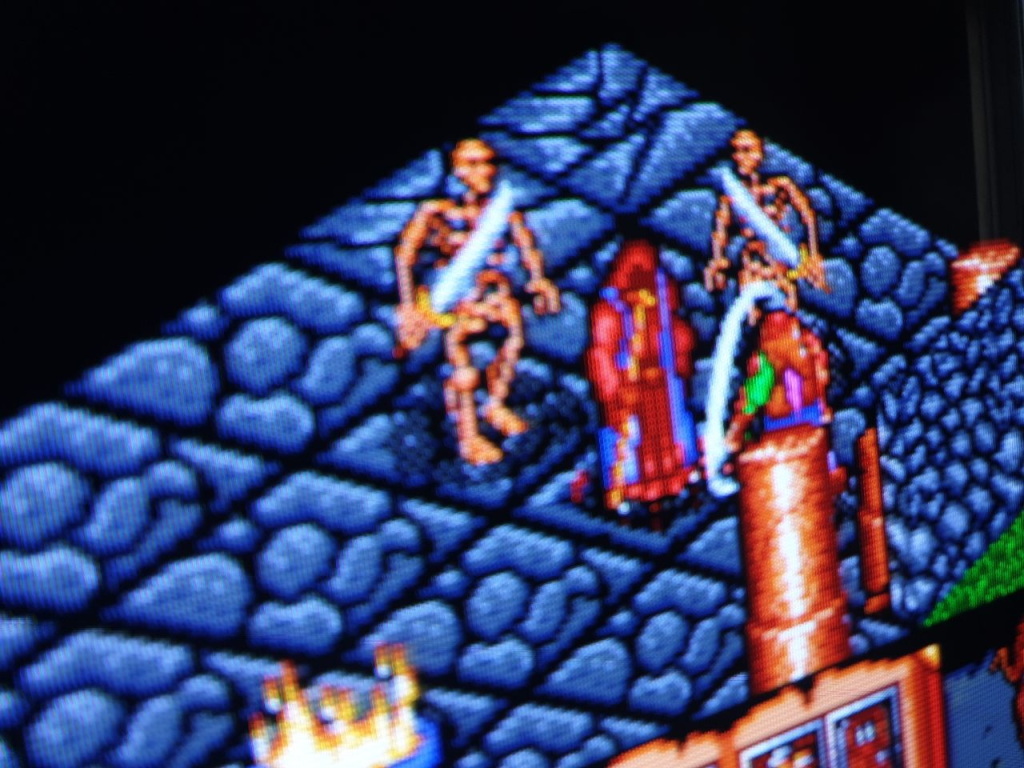
This free use of magic combined with multiple attack actions per turn resulted in him surviving some pretty hairy situations where he got surrounded – a situation that would send a chill of fear running down a first-level AD&D mage’s spine!
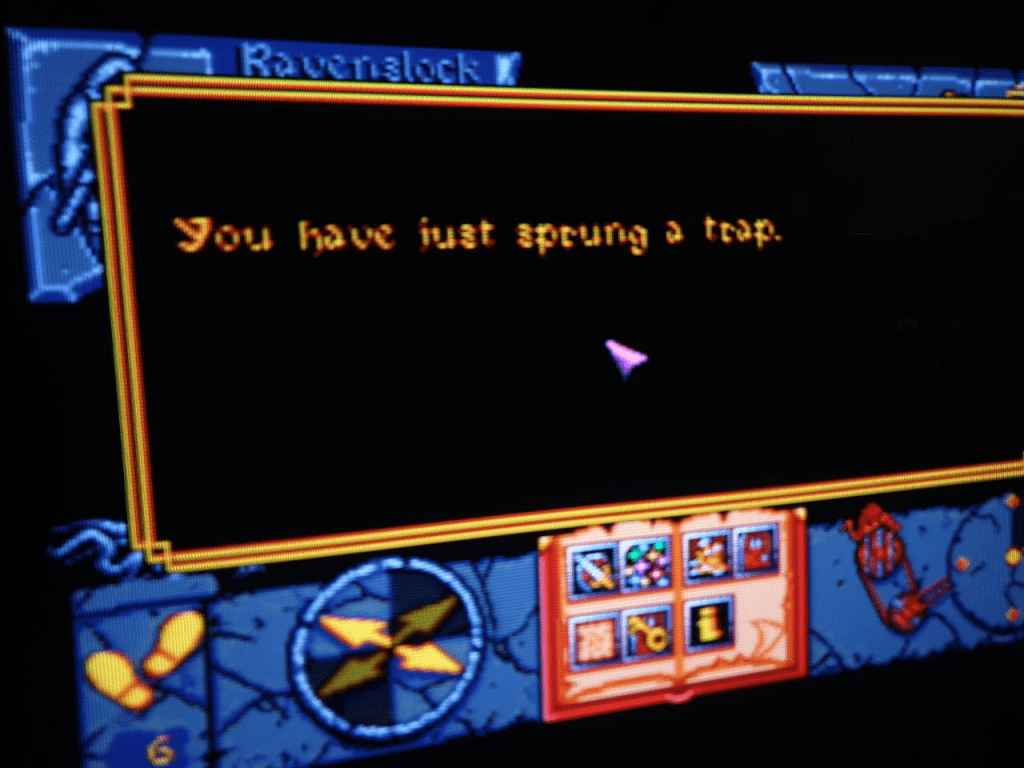
Ouch, my foot! A word of advice from someone who fell foul of many of these: search every room for traps with the little door icon on the upper right of the action list. The barrow is riddled with spike traps in almost every room and corridor we explored.

If, like Grimbeard, you have a toolkit, you can hammer planks down over traps. But in the case of this barrow, there are so many of them that it’s best just to be cautious, search every room carefully (this is where your Perception stat comes in!), and go around them. Carefully. Thankfully, and another feather in Sorasil’s cap, you search for hidden doors and traps simultaneously.

All was going reasonably well as the party more carefully considered who should act first. Then a tragic mishap struck – or perhaps it was a deliberate act, born of frustration.

All he was trying to do was pass her a healing potion, Grimbeard claimed as the rest of the party heard a surprised scream. They came hurrying over to find the dwarf standing there with a bloody axe and Calorflame’s mangled corpse on the floor. A misclick, he protested – whatever that meant.
Well, after that “accidental” slaying of a member of their party, the spirit of adventure, already flagging, left the souls of the remaining three and they turned around and sullenly trudged back to the barrow entrance to lick their wounds and consider their actions that day.
After-Action Report
It didn’t go as planned and exposed some flaws in the game, but I still enjoyed my attempt at Sorasil’s first adventure. I’ll give props for some design decisions, such as how combat can be snappy thanks to the pool of freely spendable action points in the place of rolling randomly for movement and a single attack action per turn. I anticipate you’ll be able to lay down some truly ferocious firestorms of magic. The music is wonderfully atmospheric and goes some way to making up for the absence of sound effects. But I’ll deduct points for the obfuscation of combat stats and dice rolls, for how Sorasil will bombard you with popups if you make the mistake of stepping on one or more traps already sprung, and for giving the main healer of the game no healing spells or potions to start with.
Despite sporting fancier graphics and presentation than its predecessor three years earlier, Sorasil still comes off as a wee bit dated – even against contemporaries on the Amiga. Shadowlands, Shadoworlds, and Legend/Worlds of Legend were all doing party-based, isometric dungeon crawling in real time with more satisfying and better-explained complexity. Legend and Worlds of Legend, two of my CRPG favourites, have often felt like unofficial HeroQuest games. They innovated on isometric adventuring in the ways that Sorasil should have rather than having one foot in the CRPG camp and the other foot unsteadily placed in the board game camp.
Oh, and If you’re playing it on real hardware in 2025, there’s something to be mindful of: no in-quest save. You can only save the game between quests, not during. And with the plodding pace of just the first quest, you’ll likely have to plan a couple of hours (or more) to complete them. Emulator peeps will face no such issues.
 Scanline Artifacts